 Skip to content
Introduction
Photovoltaic (PV) interconnect ribbons are critical components that determine the electrical and mechanical performance of solar modules. By connecting individual solar cells, these ribbons form the module’s current-carrying network, where uniform conductivity, precise dimensions, and reliable solderability are essential to prevent energy losses and hotspots. High-quality ribbons enhance module efficiency, ensure long-term mechanical integrity under thermal cycling, and support consistent power output over decades. In this blog, we examine the PV interconnect ribbon production process in detail, analyze the technical challenges at each stage, and highlight advanced manufacturing strategies that optimize both performance and reliability.
What is a PV Interconnect Ribbon?
A PV interconnect ribbon is a thin metallic strip designed to connect solar cells within a photovoltaic module. These ribbons must carry electrical current efficiently while withstanding mechanical stress and environmental conditions over decades.
Common Materials:
- Copper: High conductivity, excellent ductility, often tin-coated for solderability.
- Aluminum: Lightweight, corrosion-resistant, increasingly used for cost-effective modules.
- Coatings: Tin or silver plating improves solderability and protects against oxidation and corrosion.
Typical Dimensions and Performance Metrics:
- Widths typically range from 1.5 mm to 3.5 mm.
- Thickness ranges from 0.15 mm to 0.3 mm.
- Electrical resistance, mechanical flexibility, and adhesion to solder are key quality indicators.
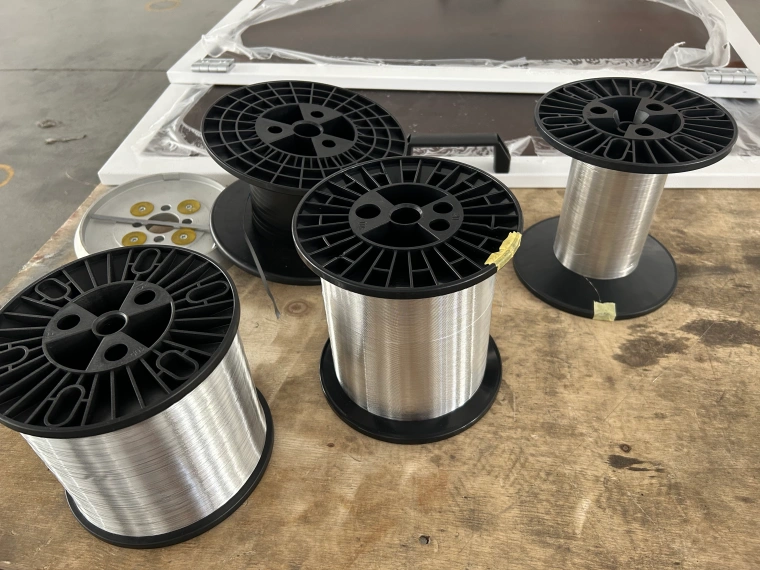

Manufacturing Process Overview
The production of PV interconnect ribbons involves precise mechanical and metallurgical processes to achieve the required electrical and mechanical properties. The process is carefully controlled to ensure consistent performance in solar modules.
Raw Material Selection
High-purity copper or aluminum is essential for achieving reliable electrical performance in PV ribbons. The raw metal must meet strict dimensional tolerances, controlled hardness, and uniform chemical composition. Before rolling, the material undergoes pre-treatment, including thorough cleaning to remove surface oxides and contaminants. In some cases, an initial annealing step is performed to reduce internal stresses and improve flexibility, preparing the material for subsequent processing.
Rolling Process
Rolling is the primary stage that shapes the metal into a ribbon with the desired thickness and width while enhancing surface quality. Cold rolling is typically used to achieve precise thickness control and a smooth surface, while hot rolling may be applied initially for larger reductions in thickness. Throughout the rolling process, careful attention is paid to dimensional accuracy, surface integrity, and internal stress control. Properly managed, this ensures uniform electrical resistance and prevents micro-cracks or warping that could compromise ribbon performance.
Annealing
After rolling, the ribbons often undergo annealing to relieve residual stresses induced during deformation and to optimize mechanical properties. Annealing improves ductility and flexibility, significantly reducing the risk of cracking during module assembly. The process involves controlled heating below the melting point, followed by slow cooling, resulting in a uniform microstructure that balances strength and flexibility.
Plating and Coating
Plating enhances both solderability and corrosion resistance, which are critical for the long-term reliability of PV modules. Tin plating is widely applied to copper ribbons to enable secure soldering to solar cells, while silver plating provides superior corrosion protection and improved electrical conductivity. Coatings are applied through electroplating for uniform thickness or hot-dipping for strong adhesion. Maintaining consistent coating thickness is vital; even small inconsistencies can create hot spots in modules and reduce overall efficiency.
Slitting and Cutting
Once plating is complete, ribbons are slit and cut to precise widths. This stage requires meticulous control to avoid burrs, deformation, or stretching that could compromise soldering quality or mechanical integrity. Proper tension control during slitting ensures the ribbon maintains its shape and properties for assembly into modules.
Quality Control
Rigorous quality control measures are implemented to verify that every ribbon meets the stringent electrical and mechanical specifications required for high-performance PV modules. Electrical resistance is measured along the ribbon length, surfaces are inspected for scratches or plating defects, and mechanical tests assess tensile strength and elongation to ensure flexibility without cracking. Finally, solderability tests confirm that the ribbons will reliably bond to solar cells during module assembly.
Challenges in PV Ribbon Production
Producing high-quality PV ribbons is technically demanding:
- Dimensional Consistency: Variations in thickness or width can increase module resistance and create hotspots.
- Surface Quality: Scratches, burrs, or contamination reduce soldering reliability.
- Microstructural Defects: Cracks or stress points can form during rolling or annealing, leading to premature failure.
- Mechanical Stress During Module Assembly: Ribbons must flex without breaking during lamination and thermal cycling.
Enhancing PV Ribbon Production with Advanced Machinery
Automation and Precision Control
The PV Interconnect Ribbon Machine 2026 integrates advanced automation throughout the production line. Critical stages such as rolling, annealing, and plating are fully monitored with inline sensors for thickness, tension, and surface quality. This level of precision minimizes human error, ensures consistent ribbon dimensions, and maintains uniform electrical resistance across long production runs.
Advanced Materials and Coatings
The machine is compatible with a variety of high-conductivity alloys and low-resistance coatings, including tin and silver plating. This flexibility allows manufacturers to optimize ribbon performance for different module designs, reducing energy losses and enhancing long-term efficiency.
Environmental Efficiency
Sustainability is built into the PV Interconnect Ribbon Machine 2026. Energy-efficient annealing systems reduce power consumption, while optimized plating and rinse processes minimize chemical waste. The machine supports recycling of rinse waters, helping manufacturers meet environmental standards without compromising product quality.
Real-Time Process Monitoring
Real-time monitoring ensures that any deviations in surface quality, coating thickness, or electrical resistance are immediately detected. This proactive approach prevents defective ribbons from reaching module assembly, reducing scrap rates and improving overall production reliability.

Conclusion
The PV interconnect ribbon is a small but critical component in solar module performance. High-quality ribbons require precise raw materials, careful rolling, annealing, plating, and rigorous quality control. By optimizing each stage of production, manufacturers can produce ribbons that not only ensure high electrical conductivity and mechanical reliability but also contribute to long-lasting and efficient solar modules. Future trends focus on thinner ribbons, superior coatings, and more sustainable production methods—key factors for the next generation of solar technology.
As a leading PV ribbon machine manufacturer, Sky Bluer Environmental Technology provides advanced production solutions tailored to your needs. Explore our custom PV ribbon machines and detailed specifications here: https://drawing-machines.com/pv-ribbon/