 Skip to content
 Yangshe Town,Suzhou City,Jiangsu,China 215600
For drawing Nitinol (NiTi) wire from intermediate sizes down to fine and ultra-fine diameters. Multi-pass drawing, controlled wire tension and intermediate annealing can be combined in one production line.
Nitinol wire is reduced through successive drawing passes to reach the required final diameter. The drawing schedule, die sequence, drawing speed and intermediate annealing are selected according to the starting wire size, material condition and required amount of cold work.
Pay-Off → Multi-Pass Drawing → Lubrication → Intermediate Annealing(optional) → Fine Drawing → Take-Up
Process | Description |
Pay-Off | Controlled feeding of the incoming Nitinol wire into the drawing line. |
Multi-Pass Drawing | The wire diameter is progressively reduced through a series of drawing dies. |
Lubrication | Drawing lubricant reduces friction between the NiTi wire and die during reduction. |
Intermediate Annealing | Annealing can be introduced between drawing stages when further reduction requires recovery of workability. |
Fine Drawing | Further drawing passes reduce the wire to the required fine or ultra-fine diameter. |
Take-Up | Finished wire is wound onto the spool under controlled tension. |
Technical Parameter | Specification |
Wire Material | Nitinol / NiTi Shape Memory Alloy |
Inlet Wire Diameter | 0.10–2.00 mm |
Finished Wire Diameter | 0.02–0.50 mm |
Drawing Method | Multi-Pass Cold Drawing |
Number of Dies | Up to 12 |
Typical Reduction per Pass | 10–15% area reduction |
Drawing Speed | 5–200 m/min |
Drawing Dies | PCD / Natural Diamond / Tungsten Carbide |
Die Half Angle | Approx. 6–10° |
Lubrication | Wet Drawing / NiTi-Compatible Drawing Lubricant |
Intermediate Annealing | Available |
Annealing Atmosphere | Inert / Protective Atmosphere |
Tension Control | Closed-Loop Tension Control |
Take-Up | Precision Spool Take-Up |
Drive System | Servo / AC Variable-Frequency Drive |
Control System | Siemens PLC + HMI |
Diameter Measurement | Online Laser Diameter Gauge, Optional |
Power Supply | 380–400 V, 50/60 Hz, 3 Phase |
Wire range, drawing speed, reduction per pass and die sequence depend on the NiTi material condition, starting diameter, finished diameter and required drawing schedule.
Drawing Parameter | Typical Range / Configuration |
Drawing Process | Multi-Pass Cold Drawing |
Area Reduction per Pass | 10–15% |
Die Half Angle | 6–10° |
Drawing Speed | 5–60 m/min |
Drawing Die | Tungsten Carbide / PCD / Diamond |
Lubrication | Wet / NiTi-Compatible Drawing Lubricant |
Intermediate Annealing | Between drawing stages as required |
Final Wire Diameter | Down to 0.02 mm |
Diameter Monitoring | Online Laser Measurement Available |
Take-Up | Constant-Tension Spool Winding |
Typical process values are provided as a reference. Actual drawing parameters are determined by NiTi grade, wire condition, diameter reduction and required final properties.
Nitinol wire is work-hardened as the diameter is reduced through successive cold drawing passes. Stable drawing conditions are therefore important, particularly for fine and ultra-fine wire.
Reduction per pass, die geometry, lubrication, drawing speed and wire tension are set according to the incoming wire diameter and the required finished size. As the wire becomes finer, these parameters require closer control to maintain stable drawing and reduce wire breakage.
Key process factors:
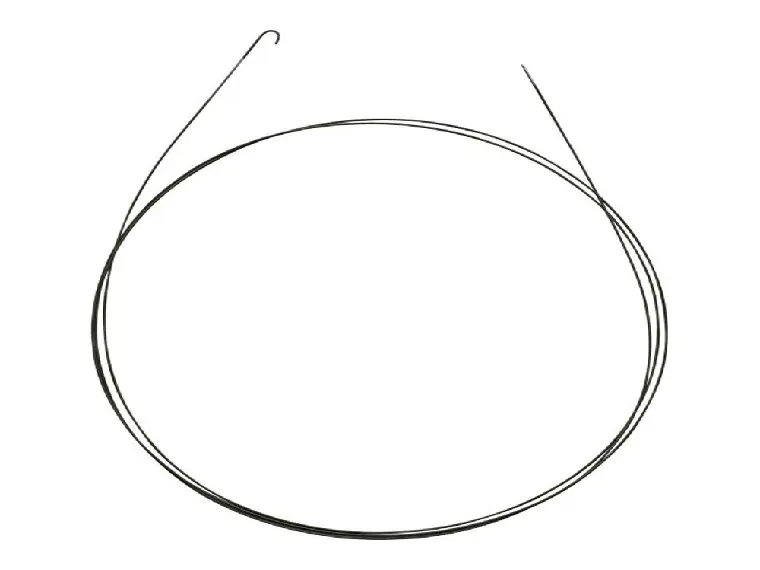

The drawing schedule is adjusted as the wire diameter decreases. Reduction, drawing speed and tension are not kept at one fixed setting from inlet to final diameter.
Nitinol wire is used in medical, orthodontic, actuator and precision industrial products. The finished wire diameter and required wire condition determine the drawing route, die sequence and take-up configuration.
Typical Applications
Nitinol Wire Application | Typical Requirements |
Medical Guidewire Components | Fine diameter, controlled surface condition and consistent wire size |
Orthodontic Archwire | Stable dimensions and controlled mechanical properties |
Shape Memory Actuator Wire | Fine wire diameter and consistent material condition |
Precision Springs | Dimensional consistency and stable winding |
Flexible NiTi Components | Fine diameter and controlled surface condition |
Ultra-Fine NiTi Wire | Small diameter, stable drawing tension and careful die sequencing |

Sky Bluer’s Nitinol and SMA wire drawing machines come with a one-year warranty and full spare parts support, including precision rolls and tension sensors. Recommended maintenance every 3–6 months keeps tension, speed, and cooling systems calibrated, ensuring consistent wire diameter, smooth surface, and shape memory performance. Remote and on-site technical support from Sky Bluer is available to minimize downtime and maintain production efficiency.
When it comes to drawing ultra-fine Nitinol or SMA wires, consistency matters. Sky Bluer machines make it easy. They keep wire diameter stable, surfaces smooth, and shape memory properties intact—every single run. The automated tension control and adjustable cooling mean less guesswork, fewer defects, and smoother production. Whether you’re making medical stents, guide wires, orthodontic components, or specialty industrial wires, our machines help your team hit quality goals without slowing down.

Send us your Nitinol wire specifications and drawing requirements. We will review the wire size, drawing route and production requirements to recommend a suitable machine configuration.
Please provide:
NiTi Grade · Inlet Diameter · Finished Diameter · Required Speed · Spool Size · Existing Drawing Schedule
If available, you can also send us a wire sample or your current process data for evaluation.