 Skip to content
Introduction
PV interconnect ribbons function as the critical electrical pathways within solar modules, enabling efficient current transfer between cells and ultimately to the module output. The material properties of the ribbon directly influence not only electrical performance but also thermal management, mechanical stability, and module longevity. Ribbons must combine low electrical resistance, sufficient tensile strength, and corrosion resistance, while maintaining compatibility with manufacturing steps such as soldering, lamination, and automated stringing. Copper is the standard choice due to its high conductivity and ductility, whereas aluminum is occasionally employed for lightweight or cost-sensitive applications. Optimizing material composition and surface treatment ensures consistent current flow, minimizes power losses, and supports reliable operation under long-term thermal cycling and environmental stress.
Key Requirements for PV Ribbon Materials
Electrical Conductivity
PV ribbons require high electrical conductivity to minimize energy losses along the module. Low-resistance ribbons prevent voltage drops, overheating, and efficiency losses in the solar panel. Copper, with its high conductivity, is the most widely used base material. Conductivity ensures efficient current transfer, prevents hot spots, and maintains module output over time.
Mechanical Strength and Flexibility
PV ribbons must endure thermal expansion cycles, bending during module assembly, and handling stress.
- Tensile strength: Maintains structural integrity.
- Ductility: Allows the ribbon to bend without permanent deformation.
Copper alloys often improve mechanical strength while maintaining adequate flexibility, making them suitable for long-term module reliability.
Corrosion Resistance
Environmental exposure—humidity, UV light, temperature fluctuations—can degrade the ribbon if the material is not corrosion-resistant. PV ribbons may be tinned or coated to resist oxidation and corrosion, which extends the operational life of the module. Tin-coated copper is standard in PV ribbon production, balancing conductivity with durability.
Surface Properties
Surface finish affects soldering and module reliability. Smooth, defect-free surfaces ensure strong solder joints with minimal resistance. Coatings must adhere uniformly, and the ribbon should maintain its integrity through lamination and module assembly processes.
Common Materials Used in PV Ribbon
Copper
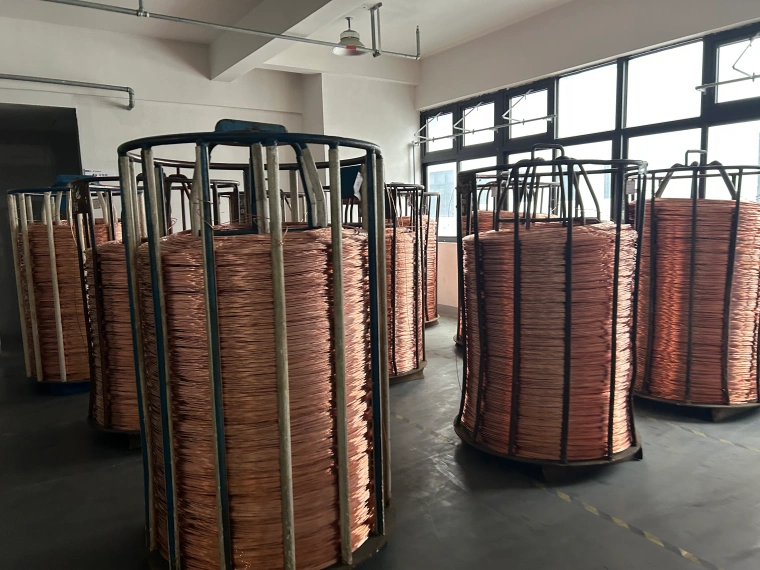
The primary material for PV ribbons is copper. Different grades of copper are used, but high conductivity is critical for maximizing solar panel efficiency. The typical copper types used are:
Material | Description | IACS Conductivity Rating Minimum | Composition |
OFC 10100/CDA 101 | Oxygen-free electronic copper | 101% | 99.99% Pure, 0.0005% Oxygen |
OFC 10200/CDA 102 | Oxygen-free copper | 100% | 99.95% Pure, 0.001% Oxygen |
OFC 11000/CDA 110 (ETP) | Electrolytic-Tough-Pitch copper | 100% | 99.9% Pure, 0.02–0.04% Oxygen |
- OFC 10100/CDA 101: Highest purity, ideal for minimizing resistive losses.
- OFC 10200/CDA 102: Slightly lower purity, still maintains excellent conductivity.
- ETP Copper (OFC 11000/CDA 110): Widely used for PV ribbons, balancing conductivity and cost-effectiveness.
Aluminum
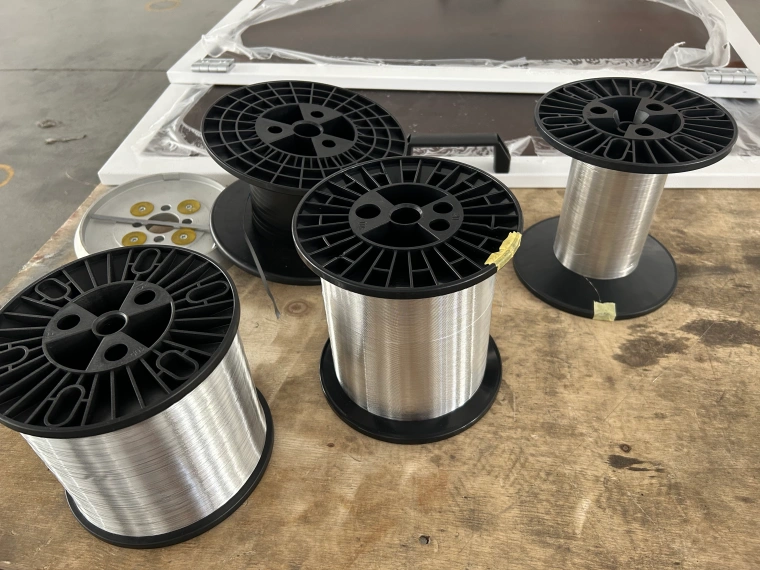
PV ribbons can also be made from aluminum, though less common. Aluminum alloys are lightweight and cost-effective but have lower conductivity and more challenging soldering properties. Common aluminum materials include:
Material | Purity |
Al1050 | 99.5% min |
Al1350 | 99.5% min |
Al1188 | 99.88% min |
Al1199 | 99.99% min |
Aluminum ribbons are generally used in specific applications where weight savings or cost reduction outweigh the slightly reduced electrical performance.
Tinned or Coated Copper
- Copper ribbons coated with tin improve solderability and corrosion resistance.
- Widely used for long-term reliability in outdoor solar modules.
Alternative Materials
Silver-coated copper ribbons: Maximize conductivity and corrosion resistance but are cost-prohibitive for standard PV modules.
Material Properties and Performance Considerations
Electrical Performance
Resistivity: Low resistivity ensures minimal energy loss.
Cross-sectional area: Must handle module current without overheating.
Current density: Adequate sizing prevents excessive thermal stress.
Industry Standards and Guidelines
- IEC 62975: Defines electrical and mechanical requirements for PV ribbons.
- UL 4703: Covers safety, conductivity, and material quality.
Compliant materials must pass quality control checks for thickness, width, conductivity, and surface finish to ensure module performance and warranty compliance.
Material Properties and Performance Considerations
Electrical Performance
- Resistivity: Low resistivity ensures minimal energy loss.
- Cross-sectional area: Must handle module current without overheating.
- Current density: Adequate sizing prevents excessive thermal stress.
Thermal Performance
PV ribbons experience thermal expansion; materials must match silicon cell expansion rates to avoid microcracks. Copper’s low thermal expansion mismatch makes it ideal.
Mechanical Performance
Yield strength and elongation: Essential for handling and lamination.
Fatigue resistance: Maintains ribbon integrity over 25+ years of module life.
Annealed copper ribbons provide a balance between strength and flexibility, allowing for reliable soldering and module assembly.
Optimizing PV Ribbon Processing for High-Performance Modules
The choice of PV ribbon material directly impacts manufacturing quality and efficiency. Our advanced PV Interconnect Ribbon Machine 2026 is designed to handle a variety of copper and aluminum alloys with precision. The PV Interconnect Ribbon Machine 2026 provides comprehensive solutions for various materials across different production stages:
- Rolling and forming: For harder copper alloys or coated ribbons, our machine employs precise multi-stage rolling to ensure consistent thickness, flatness, and dimensional tolerances. Integrated tension control and automated adjustments allow the system to maintain micron-level precision, improving electrical conductivity and mechanical reliability.
- Surface treatment: Our machine performs precise surface cleaning and tin plating to ensure strong adhesion and corrosion resistance. Inline pre-treatment and plating modules guarantee uniform coating, minimize defects, and improve long-term solderability.
- Soldering and handling: For consistent solder joints without microcracks, our machine uses controlled feed rates, tension management, and guide systems to reduce mechanical stress and prevent ribbon deformation or breakage during processing.
Materials with high ductility further simplify manufacturing, reducing ribbon breakage and assembly defects. Leveraging advanced PV Interconnect Ribbon Machine 2026 ensures high-quality, reliable PV ribbons, supporting durable and efficient solar modules.

Emerging Trends in PV Ribbon Materials
- Development of high-strength copper alloys for better mechanical durability.
- Advanced coatings for enhanced corrosion resistance while preserving solderability.
- Sustainable and recyclable copper ribbons for environmentally conscious manufacturing.
- Lightweight materials for flexible or bifacial PV modules under research.
Conclusion
Selecting the proper material for PV ribbon manufacturing is a careful balance between electrical efficiency, mechanical strength, corrosion resistance, and cost. Copper and its alloys, often with tin coatings, remain the industry standard. Material choice directly influences module performance, assembly reliability, and long-term operational stability. By understanding material properties and processing requirements, manufacturers can ensure PV ribbons contribute to high-efficiency, durable, and reliable solar modules.As a leading PV ribbon machine manufacturer, Sky Bluer Environmental Technology provides advanced production solutions tailored to your needs. Explore our custom PV ribbon machines and detailed specifications here:https://drawing-machines.com/pv-ribbon/