Skip to content

Understanding the Manufacturing Techniques, Equipment, and Material Options for Flat Copper Wire Applications
Copper wire rolling machines can handle a wide range of copper materials, including:
- Cu-ETP (Electrolytic Tough Pitch, C10100) – standard high-conductivity copper
- Cu-OF (Oxygen-Free Copper, C10200) – high-purity copper with improved ductility
- Copper alloys for mechanical strength:
- CuZn37 (Brass) – corrosion-resistant, good strength
- CuSn6 (Tin Bronze) – wear-resistant, suitable for high-load applications
- CuNi90/10 (Copper-Nickel) – corrosion and heat resistant, suitable for harsh environments
- Other specialty copper alloys (customizable per application)
These materials can be processed on multi-pass rolling lines while maintaining tight dimensional tolerances, minimal surface defects, and consistent mechanical properties.
- Stainless Steel – Known for its strength and excellent corrosion resistance, stainless steel flat wire is a popular choice for various demanding applications, especially in harsh environments.
- High-Performance Alloys – These alloys offer superior fatigue resistance, strength, and corrosion resistance, making them ideal for critical applications that require durability under extreme conditions.
- Nitinol – Valued for its unique shape memory and superelastic properties, Nitinol is commonly used in applications where flexibility and recovery are essential, such as medical devices.
- Titanium – Renowned for its high strength-to-weight ratio and biocompatibility, titanium is often used in medical, aerospace, and high-performance engineering fields.
- Carbon Steel: It is one of the most commonly used materials in construction and manufacturing due to its excellent strength, hardness, and versatility. The properties of carbon steel can vary significantly based on its carbon content.
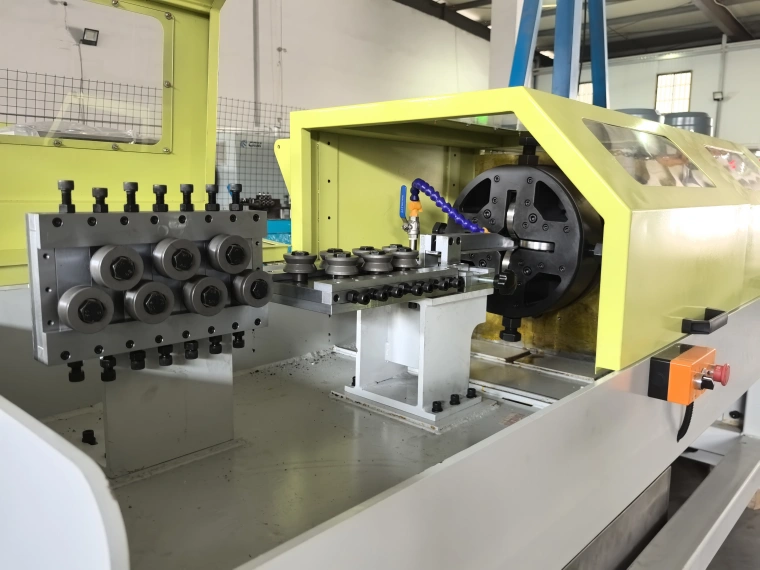
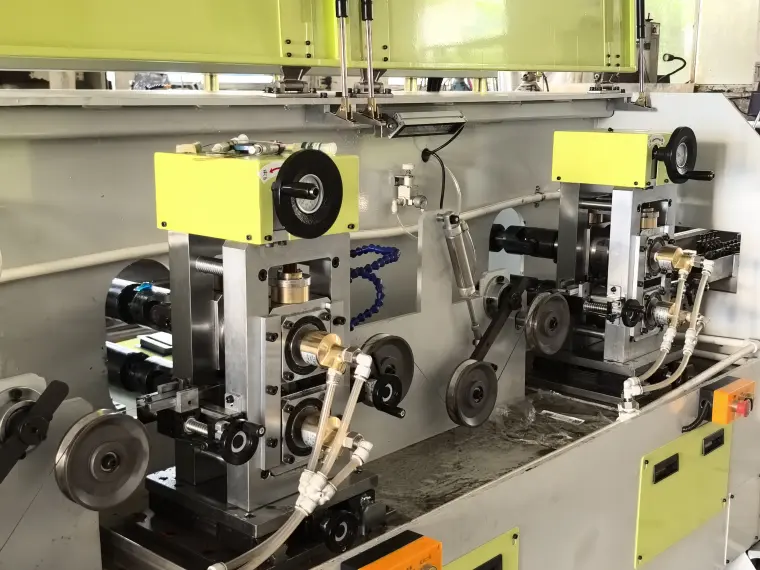
Flat wire production line is characterized by its rectangular cross-section and a smooth, bright surface, cold rolled and cold drawn flat wiremaking it suitable for various applications in industries such as construction, automotive, and manufacturing. The edges of flat wire can either adopt a natural arc shape, which provides flexibility in certain uses, or a sharp acute angle shape, offering enhanced precision for applications requiring tighter tolerances. The production process is primarily completed through cold rolling or cold drawing techniques, which not only improve the wire's mechanical properties but also ensure a consistent thickness and surface finish. These attributes make flat wire an essential component in the creation of products ranging from springs to decorative elements.
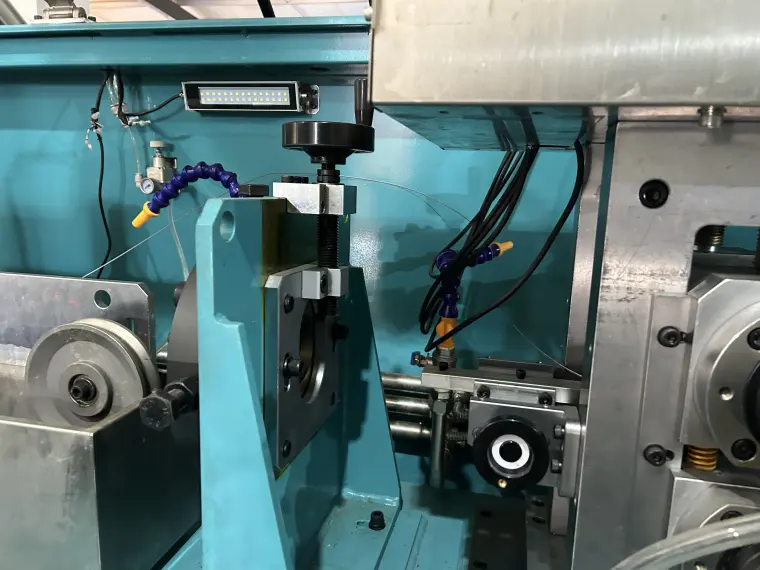
Single-pass coppe rolling performs the reduction in one stage but may stress the material more, while multi-pass rolling spreads the reduction over several stands, improving dimensional accuracy, surface quality, and tension stability.