 Skip to content
Introduction
In the spring and elastic component industry, high-precision spring steel flat wire is the core material for manufacturing automotive spring clips, compression springs, extension springs, flat springs, and industrial elastic parts. With advanced flat wire rolling solutions and precision wire flattening technology, modern rolling mills can produce flat wire with excellent elasticity, high fatigue strength, and superior surface finish.
Common materials include 65Mn spring steel, SiCr alloy spring steel, carbon steel, and stainless steel, which provide stable mechanical properties and long service life under dynamic load conditions. These materials are widely used in automotive systems, industrial hardware, precision instruments, and mechanical equipment where tight tolerances and smooth edges are required.
Our spring steel flat wire rolling mill is designed for high-accuracy production, flexible size adjustment, and stable high-speed operation, making it suitable for both heavy-duty spring clips and precision elastic components.


What Is Flat Wire Rolling Solution
A flat wire rolling solution is a complete production system used to transform round wire into flat wire or shaped wire through multi-stage rolling and precision flattening. The line typically includes pay-off, straightening, wire flattening mill, rolling mill, tension control, measurement system, and take-up equipment.
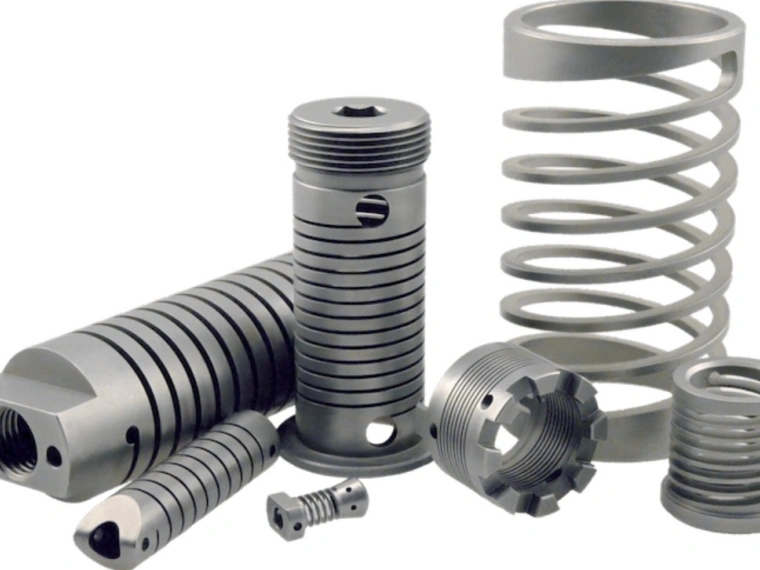


Using advanced precision wire flattening technology, the rolling mill can control thickness, width, edge radius, and surface quality with extremely tight tolerances. This ensures the flat wire meets the strict requirements of automotive springs, industrial clips, and precision elastic parts.
Compared with simple flattening machines, a full rolling solution provides better dimensional stability, higher efficiency, and wider material compatibility.
How Flat Wire Rolling Mill Works
The production process starts with round spring steel wire placed on the pay-off unit. The wire passes through a straightening system to remove internal stress and ensure stable feeding. It then enters the flattening and rolling section, where multiple rolls gradually reduce thickness and control width.
During rolling, the tension control system keeps the wire stable, while online gauges monitor thickness and width in real time. After rolling, the finished flat wire is collected by the take-up unit or sent to further processing such as drawing, annealing, or coiling.
With precise roll design and servo control, the rolling mill can produce flat wire with high consistency, smooth edges, and excellent surface quality even at high speed.
Typical Size Range for Spring Steel Flat Wire
Spring steel flat wire used in elastic components must meet strict dimensional and mechanical requirements. Typical production range of our flat wire rolling solutions:
- Thickness: 0.5 – 5 mm
- Width: 2 – 20 mm
- Edge radius (R): 0.2 – 5 mm
- Tolerance: ±003 – 0.02 mm (depending on material and size)
Typical Applications
Automotive Spring Clips
- Width: 10–20 mm
- Thickness: 2–5 mm
- Edge radius: 0.3–5 mm
- Tolerance: ±005–0.01 mm
Used in suspension systems, seat mechanisms, locking structures, and high-load spring components.
Industrial Compression Springs & Flat Springs
- Width: 5–15 mm
- Thickness: 0.8–3 mm
- Edge radius: 0.2–4 mm
- Tolerance: ±005–0.015 mm
Used in machinery, tools, clamps, and industrial hardware.
Precision Instrument Spring Parts
- Width: 2–5 mm
- Thickness: 0.5–1 mm
- Edge radius: 0.2–3 mm
- Tolerance: ±003–0.01 mm
Used in instruments, automation equipment, and precision mechanical parts


Our spring steel flat wire rolling mill is fully compatible with the specified dimensions and tolerance ranges, ensuring exceptional thickness uniformity, edge precision, and surface finish. The equipment can meet production requirements for both large automotive spring sheets and micro-precision spring sheets, providing high-performance, stable, and reliable flat wire processing solutions for spring and elastic component manufacturing.
Advantages of Precision Flat Wire Rolling Solutions
- High dimensional accuracy:Advanced rolling control ensures tight tolerance on thickness, width, and edge radius.
- Excellent surface quality:Multi-stage rolling produces smooth, clean, and uniform flat wire surface.
- Wide material compatibility:Suitable for spring steel, carbon steel, stainless steel, alloy steel, and non-ferrous metals.
- Flexible production range:Capable of producing both heavy automotive spring clips and small precision elastic parts.
- Stable high-speed operation:Optimized structure allows continuous production with reliable performance.
- Easy integration:The rolling line can be combined with drawing machines, annealing lines, and coiling systems.

Frequently Asked Questions
How often do the rolling rolls need to be replaced?
Roll life depends on material, hardness, and production volume. For spring steel and alloy steel, rolls usually need regrinding or replacement after long-term continuous production. With proper maintenance, high-quality rolls can be used for a long period while keeping stable tolerance and surface quality.
Can I use a single flattening machine instead of a full rolling line to reduce cost?
Yes, for simple applications a single wire flattening machine can be used. However, for automotive spring clips, precision springs, or tight tolerance flat wire, a complete flat wire rolling solution with multi-stage rolling and tension control is recommended to ensure dimensional accuracy, edge quality, and stable mechanical properties.
What is the typical delivery time for a flat wire rolling mill?
Delivery time depends on machine size, configuration, and customization level. Standard flat wire rolling lines usually require about 60–90 days, while fully customized spring steel rolling solutions may take longer due to special roll design and control systems.
How do different materials affect machine configuration?
Different materials such as carbon steel, spring steel, stainless steel, or alloy steel require different roll materials, motor power, and tension control systems. High-strength spring steel usually needs stronger rolls, higher rigidity, and more precise control to maintain tolerance and surface finish.
How are spare parts and technical support provided?
We provide long-term spare parts supply including rolls, bearings, guides, and control components. Technical support is available through online service, drawings, video guidance, and on-site installation if required. This ensures stable operation of the flat wire rolling line for many years.
Can the rolling line be connected with existing wire drawing machines?
Yes. Our flat wire rolling solutions can be designed to work with existing drawing machines, annealing lines, and take-up systems. This allows customers to upgrade production without replacing the entire line.
What tolerance can the flat spring steel wire rolling mill achieve?
Typical tolerance range is ±0.003 – 0.02 mm depending on size and material. For precision spring steel flat wire used in automotive clips and elastic components, the rolling mill can maintain very stable thickness, width, and edge radius.
Can the machine produce different sizes on one line?
Yes. The rolling mill can produce different flat wire sizes by changing rolls and adjusting settings. Our machines are designed for flexible production, allowing manufacturers to produce multiple spring steel flat wire specifications on the same line.
Looking for a Reliable Wire Processing Machine Solution?
We provide rolling mills, flattening machines, annealing lines, and full flat wire production solutions.
Send us your wire size and material, and we will recommend the best machine.
Contact us now.