 Skip to content
Introduction
Flat rectangular and special profile wire manufacturers always debate two mainstream cold forming technologies: die-based shaped wire drawing and roller-based flat wire rolling. Each process has exclusive advantages for specific cross-section shapes, batch sizes and material types. This side-by-side comparison helps factories eliminate wrong process investment and improve finished wire yield rate, supported by Bekaert and Voestalpine industrial forming technical standardsBekaert.
Core Definition of Two Forming Technologies
Shaped Wire Drawing: Pull round wire through fixed custom profile dies for one-time cross-section shaping; deformation relies on die inner cavity geometry. Supports square, D-shaped, hexagonal, asymmetric complex small profiles with sharp corner tolerances.
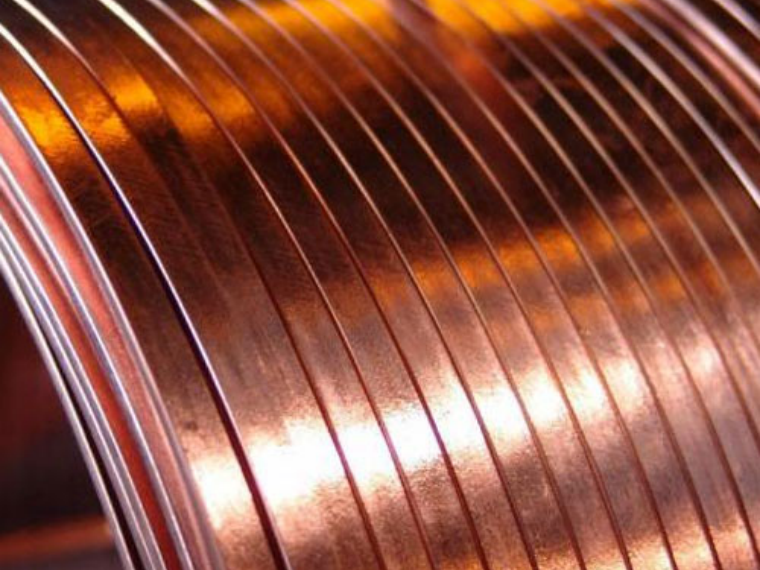
Flat Wire Cold Rolling: Compress round wire between two adjustable horizontal rollers to form rectangular flat wire; mainly produces wide, thin uniform flat strips for transformer winding and photovoltaic ribbons. Complex multi-angle profiles cannot be manufactured via pure rolling alone.
Dimensional Precision & Tolerance Comparison
Shaped Wire Drawing Advantages
- Tighter cross-section symmetry control; consistent thickness across all profile edges
- Ultra-fine complex profiles achieve ±0.001mm tolerance with PCD dies
- Sharp inner/outer corner radii can be precisely locked via die CNC machining
Flat Wire Rolling Limitations
- Good for simple rectangular flat wire only; edge radii naturally rounded by roller gaps
- Tolerance fluctuates ±0.01~±0.03mm under long high-speed runs due to roller thermal expansion
- Asymmetric profiles cannot maintain uniform dimensional stability
Compatible Profile Shape Flexibility
Shaped Drawing Machine Supported Shapes
Square, rectangular, D-shape, trapezoidal, half-round, triangular, multi-groove custom asymmetric wire; any closed cross-section design on technical drawings can be realized via custom die manufacturing.
Flat Rolling Supported Shapes
Only single-layer uniform rectangular flat wire; cannot form protruding grooves, concave slots or multi-sided angular profiles. Mixed profile batch production requires full roller set replacement, taking 2–4 hours downtime vs 30-minute die cassette swap on drawing machines.
Material Processing Suitability
Shaped Wire Drawing Best For
- Thin soft copper alloy ultra-fine profiles (medical conductive wire)
- High-strength stainless & carbon steel spring special wire
- Titanium, nickel alloy hard-to-form precision aerospace profiles
- Small cross-section wire below 2mm total width
Flat Wire Rolling Best For
- Wide thin copper flat wire for EV motor magnet winding (width >5mm)
- Large batch uniform photovoltaic busbar ribbon
- Low-carbon mild steel wide flat strip without strict corner precision demand
Surface Finish & Defect Rate
Wet shaped drawing: Fully enclosed lubrication cooling eliminates roller indentation; mirror surface finish, burr-free edges, low scrap rate <1.2%
Flat rolling: Roller contact easily creates longitudinal indent marks; dry rolling generates oxide discoloration on copper wire, average scrap rate 3%–5% without post-polishing
Production Throughput & Operating Cost
| Index | Shaped Wire Drawing | Flat Wire Rolling |
| Max Running Speed | 30–45 m/min (fine wire) | 60–100 m/min (wide flat strip) |
| Tooling Replacement Cost | Medium (PCD dies long service life) | High (rollers wear fast on stainless steel) |
| Lubrication Consumption | Low, enclosed circulation system | High, open roller spray lubrication waste |
| Batch Change Downtime | 20–30 mins cassette die swap | 120–240 mins roller gap readjustment |
Investment & Floor Space
Shaped wire drawing machine: Small footprint, single host integrates payoff-lubrication-forming-take-up; lower initial investment for multi-profile mixed production
Flat wire rolling mill: Multi-stand rolling frame occupies larger workshop area; higher total equipment cost for wide-strip mass production lines

When Should You Choose Shaped Wire Drawing?
Select drawing process if your production matches any below conditions:
- Need complex asymmetric, multi-angle custom profile wire
- Require ultra-tight dimensional tolerance and sharp precise corners
- Produce small-batch mixed multiple wire shapes frequently
- Process titanium, stainless steel hard alloy precision wire
- Limited factory workshop space for large multi-stand rolling equipment
When Should You Choose Flat Wire Rolling?
Choose cold rolling only for:
- Mass single-spec wide rectangular copper flat wire for new energy transformers
- High-speed continuous production without frequent shape switching
- Low tolerance requirement for flat strip edge radii
Hybrid Process Solution (Sky Bluer Custom Line)
Many large factories adopt combined drawing + rolling integrated lines: Pre-roll round wire into rough flat blank, then finish-shape via precision shaped drawing dies to balance high throughput and complex profile accuracy. Our full production line article details hybrid line layout design: Complete Shaped Wire Drawing Production Line
Conclusion
Shaped wire drawing dominates precision, multi-profile small-batch manufacturing, while flat rolling leads wide single flat strip mass production. Confirm your core wire shape, tolerance standard and material before finalizing cold forming equipment investment. Explore our main pillar guide to browse full shaped wire drawing machine product categories and technical parameters.