 Skip to content
A two-roll rolling mill is a widely used wire rolling mill designed for the cold rolling of metal wire and strip. Thanks to its simple structure, stable performance, and high rolling accuracy, it is commonly applied in the production of flat wire, rectangular wire, and simple profile wire across various industrial fields.
This article explains the working principle, key components, roll specifications, and typical applications of a two-roll rolling mill, helping you better understand how this flat wire rolling machine works and where it is best applied.
What Is a Two Roll Rolling Mill?
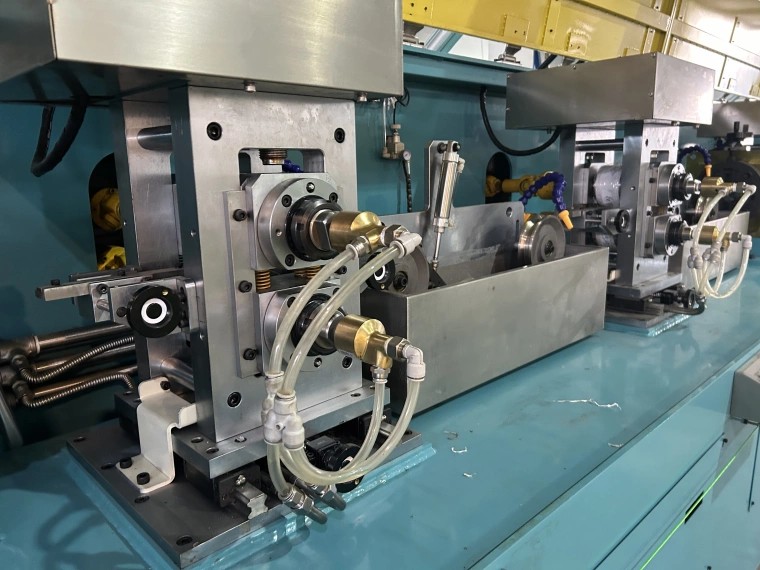
A two-roll rolling mill is a cold rolling mill consisting of two working rolls arranged vertically, with one roll positioned above the other as the upper and lower rolls. During operation, the round wire, rod, or strip passes through the roll gap formed by the two rolls at room temperature.
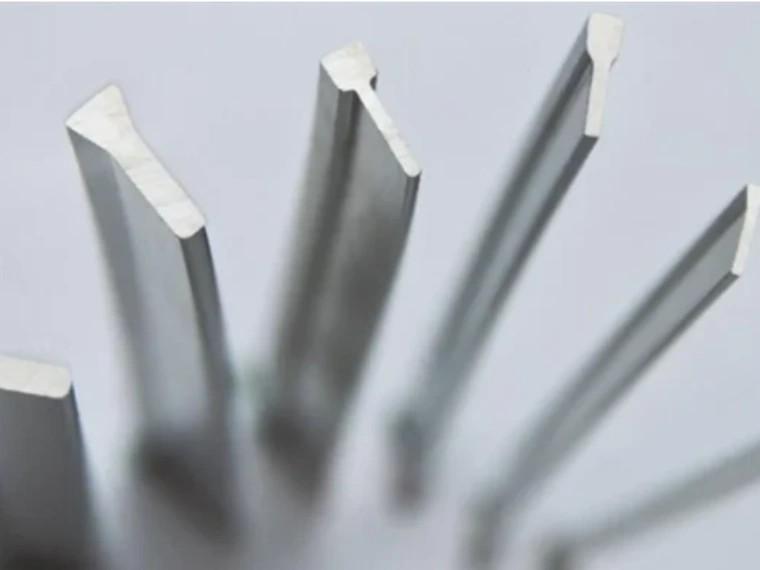
Under the pressure applied by the rolls, the metal material undergoes plastic deformation, allowing a round wire or rod to be rolled into flat wire, rectangular wire, or other required cross-sectional shapes. This process enables precise thickness reduction, cross-section adjustment, and profile forming.
Because of its simple mechanical structure and stable operation, the two-roll rolling mill is widely used for the cold rolling of metal wire, flat wire, and simple profile wire.
Working Principle of a Two Roll Rolling Mill
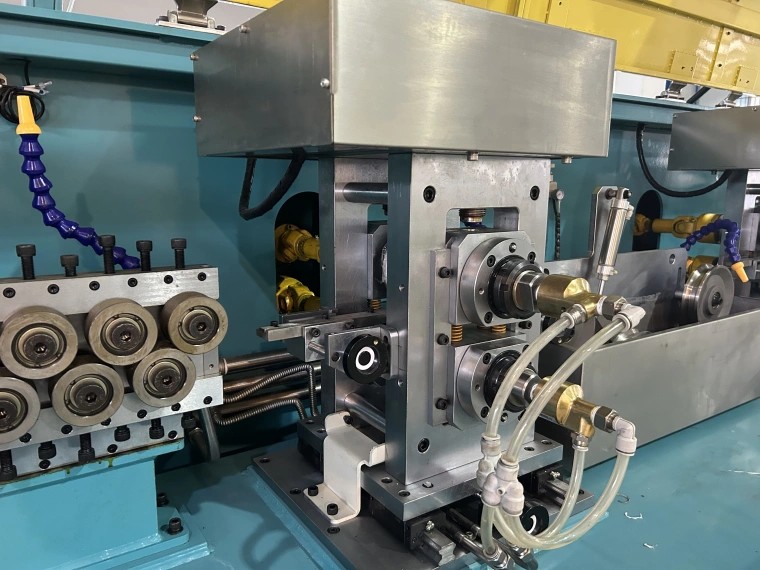
The working principle of a two-roll wire rolling mill is based on continuous compression between two counter-rotating rolls.
Rolling Process
As the metal wire enters the roll gap, the rotating rolls apply controlled pressure to the material. The roll gap is adjusted according to the target thickness and profile. Once the material passes through the rolls, it exits with a reduced thickness and a newly formed cross-sectional shape.
Compared with multi-roll rolling mills, a two-roll rolling mill offers simpler adjustment, easier operation, and higher production efficiency for processes with moderate deformation requirements.
Main Components of a Two Roll Rolling Mill
The performance of a two-roll rolling mill largely depends on the quality and design of its key components.
Rolling Rolls
The rolling rolls are the core working parts of the mill. They are manufactured from high-hardness, wear-resistant materials and mounted on the mill frame, driven by the main transmission system.
Each roll consists of a roll body, roll diameter, and roll neck. The roll necks are supported by bearings, and rolling force is transmitted to the mill frame through bearing housings and the roll gap adjustment (screw-down) system. The roll shaft ends are connected to couplings that transmit rolling torque.
Roll Precision and Surface Quality
Tungsten carbide rolls achieve a mechanical runout of less than 0.0015 mm
Surface roughness reaches Ra 0.012–0.025 μm, ensuring excellent surface finish and dimensional accuracy
Roll Materials
Tungsten carbide
Tool steel
Roll Diameter Options
Available roll diameters include 106 mm, 125 mm, 150 mm, 175 mm, 200 mm, 250 mm, 300 mm, 350 mm, and 400 mm, with customized sizes available upon request.
Roll Lubrication and Cooling System

To ensure stable operation and long roll life, the two-roll rolling mill is equipped with a forced lubrication and cooling system.
External oil spray system for roll and wire lubrication and cooling
Internal water-cooling system with an industrial chiller for temperature control during continuous rolling
Includes a rolling fluid tank and water chiller unit
This system effectively reduces roll wear and improves surface quality during cold rolling.
Roll Gap Adjustment and Quick Roll Change
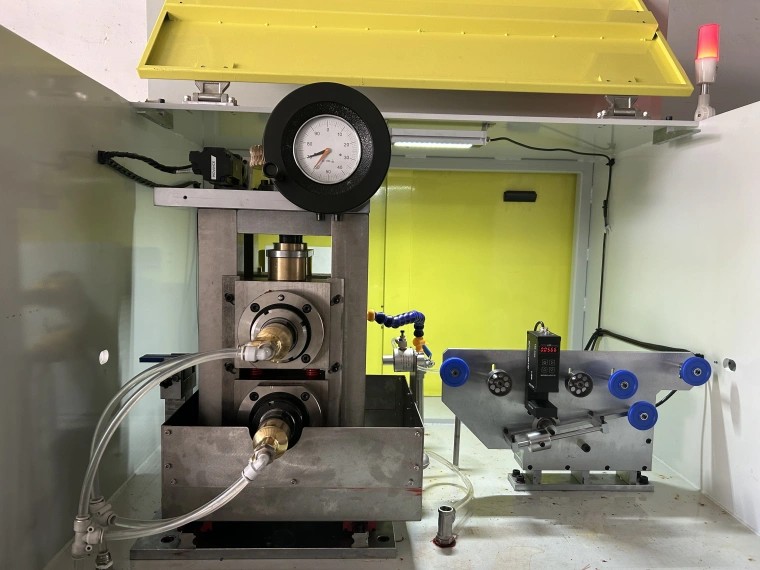
Roll gap adjustment:
Available in manual adjustment with scale display or servo-driven adjustment for higher precision.
Quick roll change system:
Enables roll replacement within 3 minutes, minimizing downtime and improving production efficiency.
Applications of a Two Roll Rolling Mill
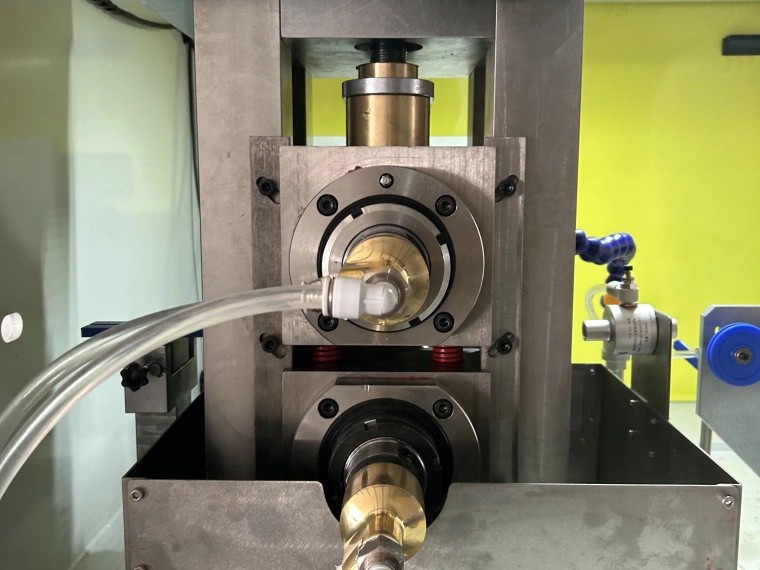
A two-roll rolling mill for wire is widely used in various industries, including:
Flat wire and ribbon wire production
Welding wire and flux-cored wire manufacturing
Electrical and electronic components
General metal wire and strip processing
It is especially suitable for manufacturers producing flat wire and simple profile wire with stable specifications.
Advantages of a Two Roll Rolling Mill

Choosing a two-roll rolling mill offers several key advantages:
Simple and robust mechanical structure
Stable rolling performance and high-dimensional accuracy
Easy operation and maintenance
Flexible configuration and easy integration into continuous production lines
Cost-effective solution for cold rolling applications
Conclusion
The two-roll rolling mill is a reliable and efficient wire rolling machine for the cold rolling of metal wire and strip. With precise roll control, high-quality rolling rolls, and flexible configuration options, it provides an ideal solution for producing flat wire, rectangular wire, and simple profile wire.
For manufacturers seeking a stable, cost-effective, and easy-to-operate flat wire rolling machine, the two-roll rolling mill remains a proven choice.
About Sky Blu China
Sky Bluer China specializes in the design and manufacture of wire rolling mills, including 2-Hi rolling mills, as well as wire drawing machines, wire flattening machines, and wire shaping machines. With extensive experience in metal wire processing equipment, we provide reliable and customized solutions to meet a wide range of production requirements.
If you are looking for a professional and dependable partner for wire processing machinery, welcome to contact Sky Bluer China. Our team will be pleased to discuss your application and provide a suitable solution.
Contact Us
Company: Sky Bluer China
Website: https://drawing-machines.com/
Email: drawingmachine66@gmail.com
WhatsApp: +86 136 4191 9128