 Skip to content
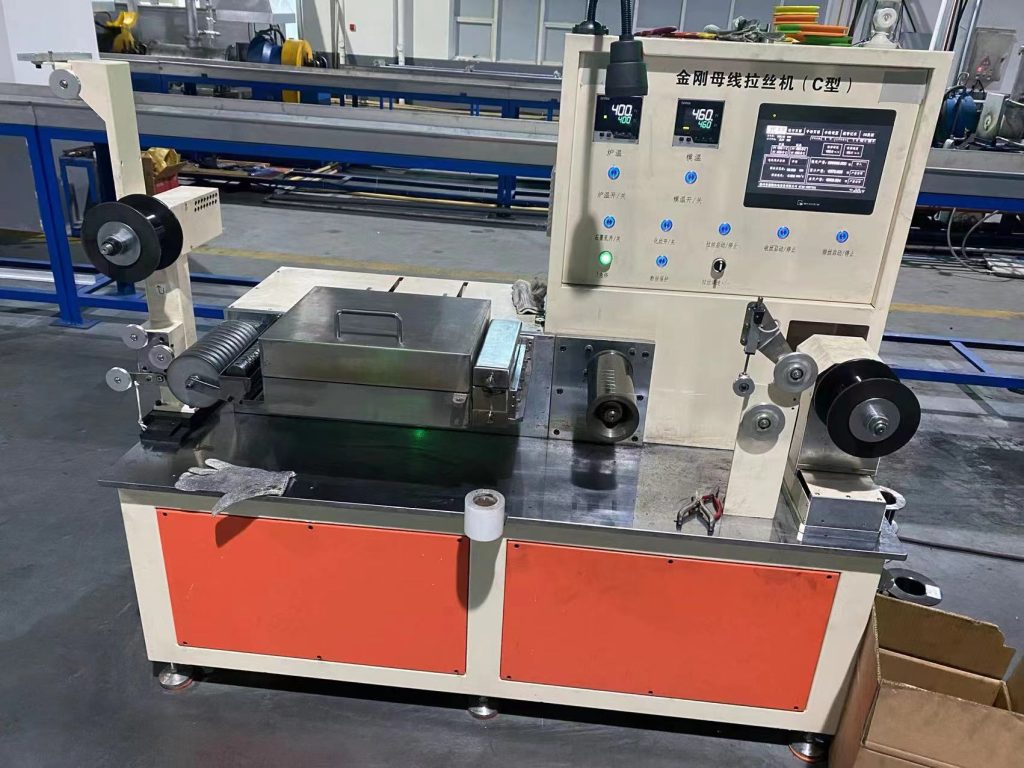
Tungsten Wire Drawing Machine
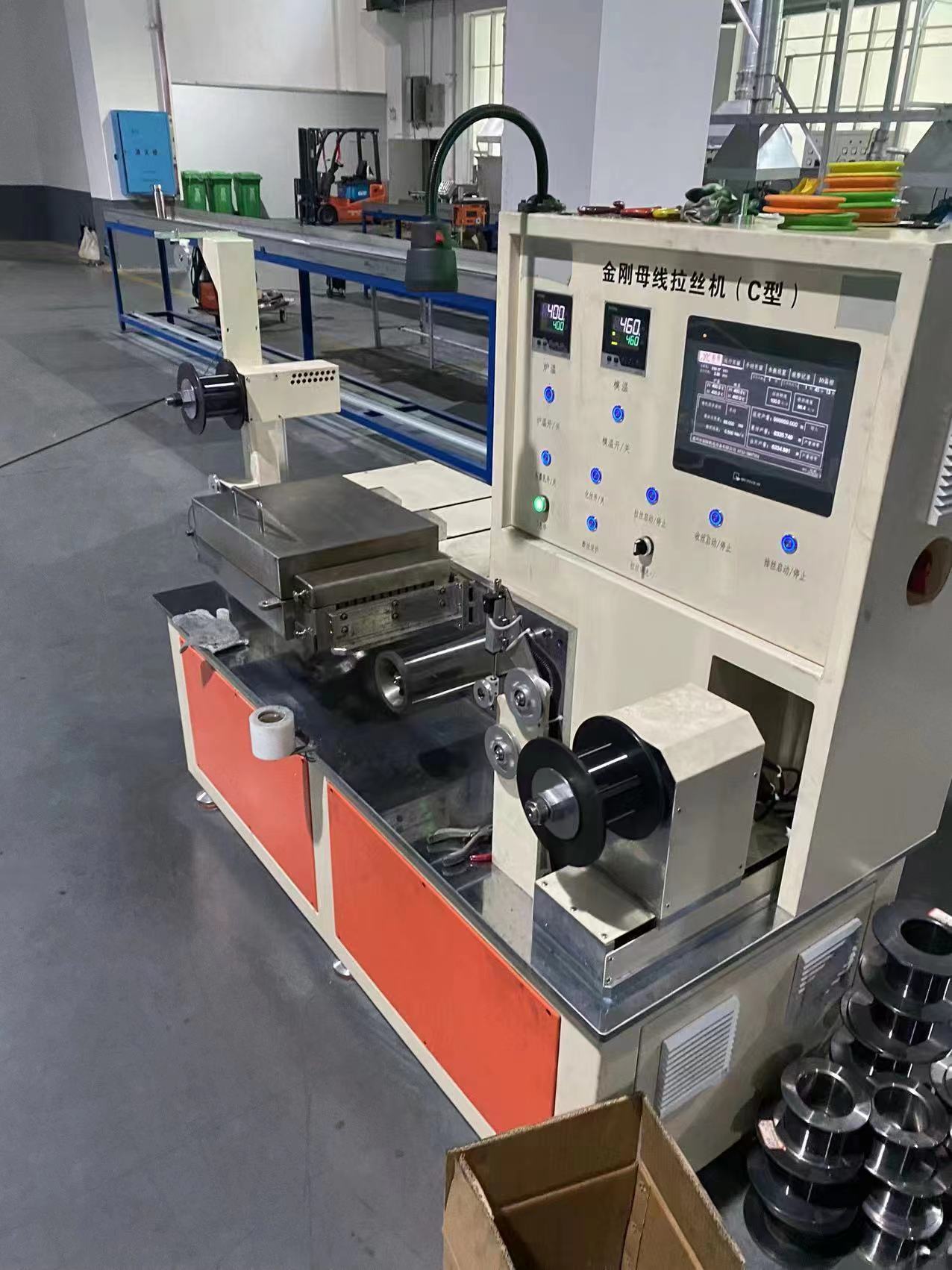
The CRM tungsten wire drawing machine is designed for hot and cold drawing of fine and ultra-fine tungsten wire. Rough, fine, and micro drawing configurations are available for progressive diameter reduction down to 0.025 mm. Drawing temperature and machine configuration are selected according to the wire diameter, tungsten grade, and required finished wire properties.
Tungsten Wire Drawing Machine Process & Specifications
Tungsten wire drawing requires different drawing conditions according to the wire diameter, material grade, and finished wire requirements. The CRM series is available for rough, fine, and micro drawing, with hot or cold drawing configurations selected according to the application.
- Drawing Process
- Machine Specifications
- Drawing Stages
Tungsten wire is progressively reduced through a series of drawing dies. Because of the limited ductility of tungsten at lower temperatures, the wire and drawing dies are heated during the drawing process.
Drawing temperature, reduction per pass, die condition, lubrication, and wire tension are controlled according to the wire diameter and drawing stage.
Process Flow
Pay-Off → Wire Heating → Multi-Pass Drawing → Die Heating → Lubrication → Diameter Control → Take-Up
Process | Function |
Pay-Off | Feeds the tungsten wire into the drawing section. |
Wire Heating | Heats the wire before drawing to improve drawability. |
Multi-Pass Drawing | Reduces the wire diameter progressively through a series of dies. |
Die Heating | Maintains the required die temperature during drawing. |
Lubrication | Graphite-based lubricant reduces friction between the wire and drawing dies. |
Diameter Control | Monitors the finished wire diameter during production. |
Take-Up | Winds the finished tungsten wire onto the bobbin. |
Tungsten Wire Drawing Machine Specifications
Three machine configurations are available for progressive tungsten wire drawing from rough wire to micro wire.
Technical Item | Rough Drawing | Fine Drawing | Micro Drawing |
Machine Model | CRM-230 | CRM-210 | CRM-150 |
Inlet Diameter | Ø0.30–0.40 mm | Ø0.15–0.19 mm | Ø0.05–0.08 mm |
Finished Diameter | Ø0.15–0.19 mm | Ø0.05–0.08 mm | Ø0.025–0.035 mm |
Max. Line Speed | 100 m/min | 150 m/min | 180 m/min |
Number of Dies | Up to 12 | Up to 12 | Up to 12 |
Lubrication | Graphite Emulsion | Graphite Emulsion | Graphite Emulsion |
Furnace Temperature | Up to 800°C | Up to 800°C | Up to 800°C |
Die Temperature | Up to 600°C | Up to 600°C | Up to 600°C |
Bobbin Diameter | Ø133 / Ø166 mm | Ø133 / Ø166 mm | Ø133 / Ø166 mm |
Tungsten Wire Drawing Stages
Drawing Stage | Typical Diameter Reduction | Main Process Requirement |
Rough Drawing | Ø0.30–0.40 → Ø0.15–0.19 mm | Higher wire heating temperature |
Fine Drawing | Ø0.15–0.19 → Ø0.05–0.08 mm | Controlled heating and reduction |
Micro Drawing | Ø0.05–0.08 → Ø0.025–0.035 mm | Precise temperature and tension control |
Temperature Control for Tungsten Wire Drawing

Wire Preheating

Heated Drawing Dies

Temperature Control
Built for Fine Tungsten Wire Production
The CRM series covers rough, fine, and micro tungsten wire drawing, with finished diameters down to 0.025 mm. Different machine configurations are used as the wire diameter is progressively reduced, allowing the production line to be matched to the required starting and finished wire sizes.
The machine can be used for both hot and cold drawing processes. For hot drawing, wire heating and die heating are integrated into the line. For cold drawing, the machine can be configured without external heating according to the material condition and drawing requirements.
CRM tungsten wire drawing machines are suitable for producers of fine tungsten wire, ultra-fine tungsten wire, tungsten core wire for diamond cutting wire, and other precision tungsten wire products.
For a new production line, we can recommend the machine configuration based on your inlet diameter, finished diameter, tungsten grade, required speed, and bobbin size.
FAQ Guide | Tungsten Wire Drawing Solutions
Tungsten has limited ductility at lower temperatures, and its fracture behavior is strongly affected by temperature, reduction per pass, die geometry, lubrication, back tension, and drawing speed. For this reason, hot drawing is commonly used during tungsten wire production, particularly when the wire still requires significant deformation. Correct temperature control helps maintain suitable deformation conditions and reduces the risk of brittle fracture.
Yes, but whether cold drawing is suitable depends on the tungsten grade, processing history, wire diameter, and required final properties. Tungsten wire production is not based on one fixed temperature from beginning to end. Drawing conditions can change as the wire becomes finer, and some production routes use lower temperatures in later drawing stages.
A large diameter reduction is normally divided into multiple drawing stages rather than completed in one step. As the wire becomes finer, the allowable reduction, drawing speed, tension, temperature, and die sequence must be adjusted more carefully. This staged approach makes it easier to control drawing stress and wire breakage when producing very fine tungsten wire.
Wire breakage is rarely caused by one parameter alone. Typical causes include unsuitable drawing temperature, excessive reduction per pass, incorrect die geometry, poor lubrication, excessive back tension, unstable drawing speed, and defects inherited from previous processing stages.
For tungsten in particular, fracture behavior is closely related to its microstructure and ductile-brittle transition behavior, so the drawing schedule must be matched to both the material and the required finished diameter.
Graphite is suitable for elevated-temperature drawing because it can provide lubrication under conditions where conventional low-temperature lubricants are unsuitable. In tungsten wire production, graphite-based suspensions can form a lubricating layer on the wire surface, reducing friction between the wire and die and helping limit die wear.
The lubricant condition is also important: insufficient lubrication can increase surface damage and friction, while excessive or poorly controlled coating can also affect drawing stability and finished wire condition.
No. The required temperature normally changes with wire diameter, tungsten grade, reduction schedule, and drawing stage. In some tungsten wire production routes, the heating temperature is progressively reduced as the wire diameter becomes smaller.
For this reason, the maximum furnace or die temperature shown in a machine specification should be understood as equipment capacity rather than the fixed production temperature for every wire size.
Reduction per pass directly affects drawing stress and the stress distribution inside the wire. When the wire diameter becomes very small, aggressive reduction can increase the risk of fracture and surface defects.
Ultra-fine wire therefore requires a carefully selected die sequence and reduction schedule rather than simply increasing the number of dies or running at the maximum machine speed.
Normally, such a large total reduction is divided into rough, fine, and micro drawing stages. Whether these stages are carried out on one machine or on separate machines depends on the required diameter range, drawing speed, heating arrangement, number of dies, and production route.
For a new line, it is better to define the complete diameter route first and then select the machine configuration for each stage.
No. The maximum mechanical speed of the machine is not necessarily the recommended production speed for every wire size.
As the wire becomes finer, drawing speed must be considered together with reduction per pass, temperature, lubrication, tension, die condition, and the required finished-wire quality. Ultra-fine wire generally requires more carefully adjusted drawing conditions than larger-diameter wire.
For machine selection, the most useful information is:
Tungsten grade · Inlet wire diameter · Required finished diameter · Existing drawing route · Required production speed · Bobbin size · Hot or cold drawing requirement
If an existing tungsten wire sample or current process specification is available, it can also be used to determine the drawing stages, heating arrangement, and machine configuration.
Playlist
0:16
Discuss Your Tungsten Wire Drawing Project
Sky Bluer Machinery has designed and manufactured wire drawing equipment since 2016, with machines supplied to customers in Europe and other international markets.
For tungsten wire production, machine configuration depends on the starting wire diameter, finished wire size, tungsten grade, drawing method, and required production speed. Send us your wire specifications and we will recommend a suitable rough, fine, or micro drawing configuration for your production line.
Please provide:
Inlet Diameter · Finished Diameter · Tungsten Grade · Hot / Cold Drawing · Required Speed · Bobbin Size