 Skip to content
Introduction
Magnet wire is one of the most important materials used in modern electrical equipment. It is widely applied in electric motors, transformers, generators, inductors, and various electromagnetic components where reliable electrical conductivity and stable winding performance are required.
Although magnet wire is usually recognized by its insulation coating, the quality of the conductor underneath determines the overall performance of the final product. Before copper wire enters the enameling or insulation process, it must go through a highly controlled drawing process to achieve the required diameter, surface quality, mechanical properties, and electrical consistency.
The magnet wire drawing process is a critical manufacturing stage that transforms copper rod or larger diameter copper wire into precision conductors suitable for insulation coating. Through multi-pass drawing, accurate die control, lubrication management, and proper annealing, manufacturers can produce copper wire with excellent dimensional stability and surface performance.
CRM, from Sky Bluer Env. Technology Co., Ltd., provides professional copper wire drawing machines and complete wire drawing production solutions for magnet wire manufacturers, electrical equipment suppliers, and conductor processing companies worldwide.
What Is Magnet Wire Drawing?
Magnet wire drawing is a precision cold forming process used to reduce the diameter of copper wire before applying enamel or other insulation materials.
During the drawing process, copper wire is pulled through a series of dies with gradually smaller openings. Each drawing pass reduces the cross-sectional area while improving dimensional accuracy and surface quality.
The purpose of magnet wire drawing is not only to produce a smaller wire diameter. It also ensures that the conductor meets strict requirements for:
- Diameter accuracy
- Roundness
- Surface finish
- Tensile strength
- Elongation performance
- Electrical conductivity consistency
A stable drawing process provides the foundation for high-quality enamel wire production because any conductor defects may affect insulation coating, winding performance, and the reliability of the final electrical component.
Why Wire Drawing Is Important for Magnet Wire Manufacturing
Magnet wire is used in applications where reliability is critical. A motor or transformer may contain kilometers of insulated copper wire, and even small variations in conductor quality can influence overall performance.
The wire drawing process affects several key characteristics.
First, accurate wire dimensions improve the consistency of insulation thickness. If the copper conductor diameter fluctuates, the enamel coating process may produce uneven insulation coverage.
Second, smooth surface quality helps prevent insulation defects. Scratches or surface irregularities can create weak points during coating and may reduce the service life of electrical equipment.
Third, controlled mechanical properties ensure the wire can withstand further processing, including winding, bending, and forming operations.

Magnet Wire Drawing Process Explained
Copper Rod Preparation
The manufacturing process usually starts with high-quality copper rod.
Common copper materials include:
- ETP Copper C11000
- Oxygen-Free Copper C10100
- High conductivity copper grades
The quality of the incoming copper material directly affects the drawing process.
Important raw material characteristics include:
- High electrical conductivity
- Low impurity content
- Good ductility
- Clean surface condition
Before drawing, the copper material may require surface preparation to remove contamination and ensure stable contact with the drawing dies.
Multi-Pass Copper Wire Drawing
The main stage of magnet wire production is the multi-pass drawing process.
Instead of reducing the wire size dramatically in one step, manufacturers use multiple drawing dies arranged in sequence.
For example, copper rod may gradually be reduced from several millimeters to fine wire sizes through multiple controlled passes.
A typical production range may include:
- Medium copper wire: 1.0–3.0 mm
- Fine copper wire: 0.1–1.0 mm
- Ultra-fine wire: below 0.1 mm for specialized applications
Multi-pass drawing provides several advantages:
- Reduced material stress
- Better dimensional accuracy
- Lower risk of wire breakage
- Improved surface quality
- Longer die service life
The drawing speed, reduction ratio, lubrication condition, and material temperature must be carefully controlled to achieve consistent results.
The Role of Annealing in Magnet Wire Production
Cold drawing increases the strength and hardness of copper because of work hardening.
While higher strength may be beneficial in some applications, magnet wire requires sufficient flexibility for winding and forming.
Therefore, annealing is an important part of the manufacturing process.
The annealing process restores:
- Copper ductility
- Elongation capability
- Internal stress balance
Proper annealing control allows the conductor to maintain stable mechanical properties while ensuring smooth downstream processing.
For magnet wire manufacturers, the balance between strength and flexibility is essential because the wire must withstand high-speed winding operations without breaking.
Precision Requirements for Magnet Wire Drawing
Dimensional Accuracy
Magnet wire production requires extremely stable conductor dimensions.
Typical requirements may include:
- Diameter tolerance: ±0.005 mm
- Stable roundness
- Consistent cross-section
- Excellent straightness
Accurate dimensions ensure uniform insulation thickness and predictable electrical performance.
Surface Quality
The copper surface condition directly influences the quality of the insulation coating.
A high-quality drawing process should minimize:
- Surface scratches
- Metal particles
- Uneven deformation
- Oxidation issues
Smooth copper surfaces improve enamel adhesion and insulation reliability.
Mechanical Properties
The final conductor must achieve the correct balance between strength and flexibility.
Important mechanical properties include:
- Tensile strength
- Elongation
- Bending performance
These characteristics determine whether the wire can successfully pass through high-speed winding processes.
Types of Magnet Wire Applications
Electric Motor Manufacturing
Electric motors represent one of the largest applications for magnet wire.
Motor manufacturers require copper wire with:
- Stable dimensions
- Good insulation performance
- Reliable mechanical properties
Precision drawing helps produce conductors suitable for stator and rotor winding applications.
Transformer Manufacturing
Transformers require copper conductors with excellent electrical and mechanical stability.
High-quality magnet wire contributes to:
- Efficient energy transmission
- Reliable winding structures
- Long operating life
Generators and Electrical Equipment
Large generators and industrial electrical systems also depend on precision copper conductors.
Consistent wire quality helps improve equipment reliability and reduce maintenance requirements.
How Copper Wire Drawing Machines Improve Magnet Wire Production
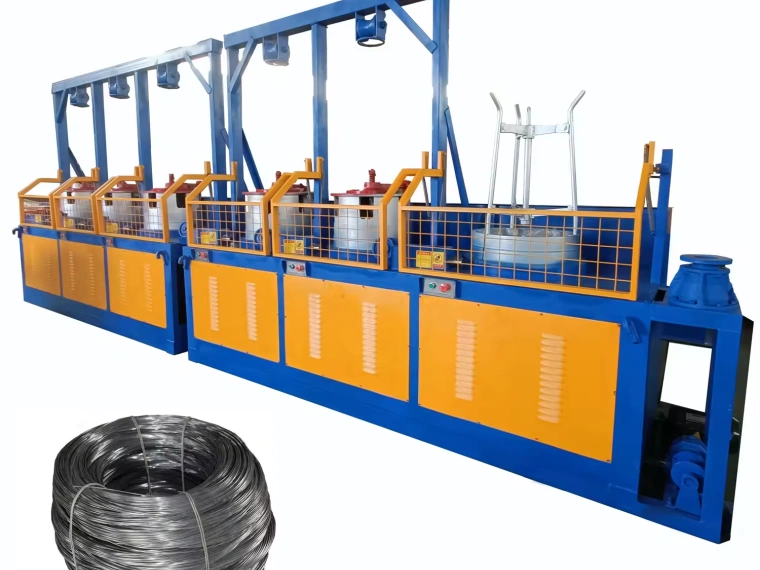
Modern magnet wire manufacturers increasingly rely on automated drawing equipment to improve production efficiency and consistency.
A professional copper wire drawing machine may include:
Automatic Tension Control
Stable tension management reduces wire fluctuation and prevents unexpected breakage during high-speed production.
Online Diameter Monitoring
Laser measurement systems and automatic inspection technologies allow manufacturers to monitor wire dimensions continuously.
This helps maintain product quality and quickly identify process deviations.
PLC Control System
Modern control systems allow operators to manage:
- Drawing speed
- Machine operation
- Production parameters
- Process monitoring
Automation improves repeatability and reduces dependence on manual adjustment.
How to Select a Magnet Wire Drawing Machine
Choosing the correct drawing equipment depends on several factors.
The first consideration is the required wire size range. Different conductor diameters require different die configurations and machine designs.
The second factor is production capacity. High-volume magnet wire manufacturers need equipment capable of continuous operation with stable speed and low downtime.
The third factor is final product requirements, including:
- Diameter tolerance
- Surface quality
- Mechanical performance
- Material type
A properly configured wire drawing line helps manufacturers achieve reliable production while maintaining consistent conductor quality.
Magnet Wire Drawing for Flat and Rectangular Conductors
Although traditional magnet wire is commonly round, many modern applications require rectangular or flat magnet wire.
Electric vehicle motors and high-efficiency transformers increasingly use rectangular copper conductors because they provide improved space utilization.
For these applications, the drawing process must control additional parameters:
- Width
- Thickness
- Corner radius
- Profile accuracy
CRM provides customized drawing solutions for both round copper wire and precision flat or rectangular conductors.
Common Challenges in Magnet Wire Drawing
During production, manufacturers may encounter issues such as:
Wire Breakage
Wire breakage can result from excessive reduction, poor lubrication, material defects, or unstable tension.
Optimized drawing parameters and proper equipment configuration help reduce these problems.
Surface Defects
Scratches or contamination may affect insulation performance.
Maintaining clean dies, proper lubrication, and stable processing conditions is essential.
Dimensional Variation
Inconsistent wire size may cause problems during enameling and winding.
Precision equipment and online monitoring help maintain stable dimensions.
CRM Magnet Wire Drawing Solutions
CRM specializes in precision wire drawing equipment and customized production solutions for electrical conductor manufacturers.
Our solutions support:
- Copper wire drawing
- Fine wire production
- Magnet wire manufacturing
- Flat and rectangular conductor preparation
With advanced mechanical design, stable control technology, and professional engineering experience, CRM helps customers improve production efficiency and achieve consistent conductor quality.
Whether producing round magnet wire, rectangular enamel wire, or customized copper conductors, CRM provides reliable wire drawing solutions tailored to specific manufacturing requirements.
For customized magnet wire drawing machine and production line solutions, contact: Sky Bluer Env. Technology Co., Ltd.