 Skip to content
Introduction to Copper Flat Wire Production
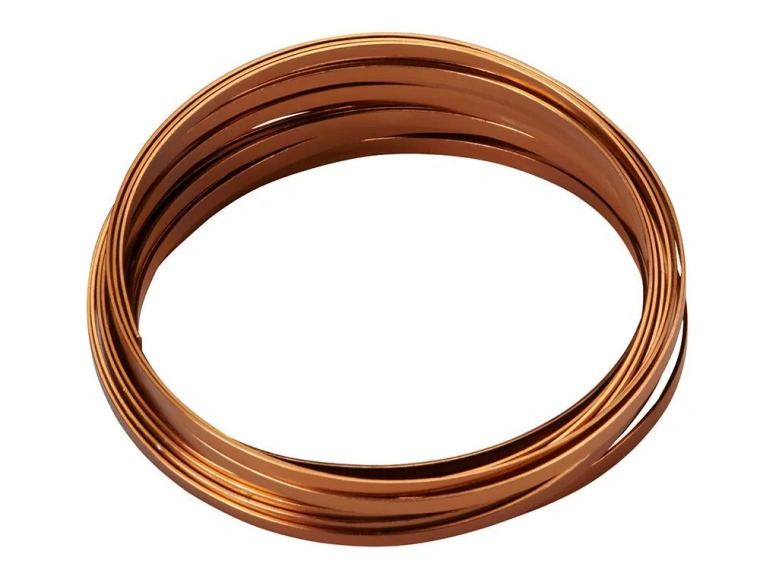
Copper flat wire is a precision-engineered conductor used in transformers, inductors, stators, coils, busbars, and precision electrical contacts. High-quality copper wire requires tight control over conductivity, thickness, surface quality, and mechanical flexibility, as small deviations can cause overheating, energy loss, or equipment failure.
In this article, we explore copper grades, standard dimensions, tolerances, and the unique Sky Bluer production process, powered by the advanced Copper Wire Rolling Mill 2026.
Copper Flat Wire Material Grades and Properties
Selecting the right copper grade ensures optimal electrical and mechanical performance:
Material Grade | Key Properties | Typical Applications |
Electrolytic Tough Pitch (ETP) Copper (C11000) | High electrical conductivity (~101% IACS), excellent ductility | General electrical wiring, busbars, connectors |
Oxygen-Free Copper (OF-Cu, C10100) | Ultra-high conductivity, low oxygen content, superior corrosion resistance | Aerospace wiring, high-end audio, precision instruments |
Copper Alloys (e.g., C14500, C19500) | Enhanced strength, wear resistance, moderate conductivity | Springs, contacts, industrial flat wire requiring mechanical durability |

Standard Copper Flat Wire Dimensions and Tolerances
Copper flat wire comes in different widths and thicknesses depending on applications.
Typical ranges:
Wire Width | Wire Thickness | Notes |
0.2 – 25 mm | 0.05 – 5 mm | Custom tolerances available for precision applications |
1 – 10 mm | 0.1 – 2 mm | Most common in transformers, coils, and enameled wire |
10 – 25 mm | 2 – 5 mm | Busbars, large-scale power distribution |
Tolerance control is critical:
- Thickness: ±0.01 – ±0.05 mm
- Width: ±0.02 – ±0.10 mm
- Flatness deviation: <0.5% of width
Strict tolerances ensure consistent winding, low resistance, and reliable electrical performance.
Sky Bluer Copper Flat Wire Production Process
Producing high-quality copper flat wire requires precise control at each stage.
Rod Preparation
- Copper rods/billets are cleaned and annealed.
- Optimizes ductility and removes surface oxides for better rolling.
Rolling and Flattening
Using Copper Wire Rolling Mill 2026, rods are transformed into flat wire:
- Stepwise Multi-Pass Rolling: Gradual thickness reduction preserves mechanical properties and prevents residual stress.
- Precision Rolls & Guides: Micron-level alignment ensures flatness, prevents twisting and edge waves.
- In-Line Thermal Management: Continuous temperature monitoring reduces internal stress and cracking.
- Surface Monitoring: Laser-based inspection detects scratches, pits, or burrs in real time.
Annealing
- Tailored Temperature Profiles: Optimized for each copper grade.
- Controlled Atmosphere: Prevents oxidation.
- Stress Relief: Reduces residual stresses for smooth coiling and bending.
Surface Treatment
Enhances wire performance for specific applications:
- Pickling & Cleaning: Removes oxides for better conductivity and coating adhesion.
- Electroplating: Tin, silver, or nickel improves corrosion resistance and solderability.
- Insulation Coating: Enamel, polymer, or varnish preserves flexibility for winding.
Cutting, Coiling, and Packaging
- Precision Cutting: Burr-free, exact lengths.
- Controlled Coiling: Maintains tension and layer alignment.
- Protective Packaging: Prevents contamination, moisture, or mechanical damage.

Applications of Copper Flat Wire
Copper flat wire is widely used in industries that require high conductivity and mechanical stability. In electrical and electronics applications, it is used for transformers, inductors, motor windings, and coils. In the automotive sector, it serves in battery busbars, connectors, and grounding strips. Aerospace uses include conductive strips for avionics and control systems, while in industrial equipment, it supports power distribution, contactors, and relays.
Key Considerations for Optimal Copper Flat Wire Performance
Optimal copper flat wire performance depends on several factors. Choosing the right copper grade ensures proper electrical and mechanical properties. Maintaining precise dimensions guarantees reliable winding and low resistance. Smooth, oxide-free surfaces enhance conductivity and durability. Using advanced rolling technology, like the Copper Wire Rolling Mill 2026, delivers consistent thickness, flatness, and high-quality results.
Conclusion
Copper flat wire is more than a conductor—it is a precision component critical to modern electrical, automotive, aerospace, and industrial systems. Sky Bluer’s Copper Wire Rolling Mill 2026 delivers high-precision, reliable copper flat wire with tight tolerances and superior electrical performance.
For businesses seeking customized, high-quality copper flat wire, investing in advanced production technologies ensures product excellence and long-term competitiveness.
Manufacturer: Sky Bluer China
Sky Bluer China is a leading manufacturer of wire rolling and flattening equipment, specializing in copper, titanium, and titanium alloy wire production. Contact Sky Bluer Environmental Technology for custom wire production solutions.