 Skip to content
Learn how to manufacture high-quality flat copper wire using precision rolling techniques. Flat copper wire is essential across many industries, including electronics, automotive, medical, and aerospace. This guide explores the full manufacturing process, benefits, and why choosing a reputable manufacturer or supplier, such as Sky Bluer Industries China, ensures you receive a high-quality product and top performance and cost efficiency.
What Is Flat Copper Wire?
Flat copper wire is a conductor with a rectangular or ribbon-like cross-section. Flat cables can occupy significantly less space than round cables, making them suitable for compact devices. Compared to round wire, it offers:
- Higher surface area for improved conductivity
- Easier winding in coils and transformers
- The flat shape of copper wire allows for better space efficiency and miniaturization in design
- Flat copper wire is extremely flexible, making it ideal for applications requiring dynamic bending
- Reduced skin effect: Flat copper wire minimizes the skin effect when used at high frequencies, reducing resistance and signal loss. The skin effect is a phenomenon where alternating current (AC), especially at high frequencies, tends to flow near the surface of a conductor, increasing the effective resistance and causing signal loss. The flat geometry of copper wire increases the surface area and reduces the path length for current, thereby minimizing the skin effect and supporting high-frequency performance.
- Due to its fixed conductor geometry, flat copper wire exhibits consistent electrical properties, including impedance and capacitance. This means that the electrical characteristics remain stable and predictable, which is crucial for applications requiring precise signal transmission.
It finds applications in electronics, automotive, electrical appliances, power generation, and telecommunications. Copper, as a strong base metal, provides excellent electrical conductivity and durability for these uses.
Types of Flat Copper Wire
Flat copper wire can be made from various types of materials tailored to specific needs:
- Electrolytic copper (ETP): High purity (≥99.9%) for excellent electrical conductivity, used in power transmission and motors.
- Oxygen-free copper (OFC): Minimal oxygen content for superior conductivity and stable mechanical properties, ideal for high-end electronics and precision motor windings.
- Copper alloys, such as brass (copper-zinc), phosphor bronze (copper-tin-phosphorus, which may also include small amounts of lead and iron), and tin bronze (copper-tin), enhance strength, wear resistance, and corrosion resistance for springs, conductors, and mechanical parts.
- Plated copper wire: Coated with tin, nickel, or silver to improve solderability, corrosion resistance, or high-temperature performance.
- Specialty copper variants: Designed for high flexibility, high temperature, or musical instrument wires.
Most alloys used for flat copper wire include a range of materials, offering versatility for different applications. The main alloy families include brass, phosphor bronze, tin bronze, and other specialty copper alloys. This list ensures a comprehensive selection for various industrial needs.
Phosphor bronze wire, a popular type, is available in various forms, including round wire and flat wire. Compared to other materials, phosphor bronze offers superior physical and mechanical properties, making it ideal for demanding industrial applications. It is especially valued for its high wear resistance and tensile strength.
Materials
Phosphor Bronze Wire
Phosphor bronze wire stands out as a high-performance material, expertly composed of copper, tin, and phosphorus. This unique alloy blend delivers a combination of properties that are highly sought after in various industries. The addition of phosphorus not only enhances the wire’s strength and elasticity but also provides excellent corrosion resistance and high wear resistance, making it an ideal choice for demanding industrial applications.
One of the key advantages of phosphor bronze wire is its outstanding durability and thermal conductivity. These attributes make it a popular choice for manufacturing electrical connectors, electrical contacts, bushings, and springs—components that require both reliability and long service life. The wire’s ability to withstand harsh environments and resist corrosion ensures consistent performance in electronics, automotive, and other industrial sectors.
Manufacturers ensure the quality and performance of phosphor bronze wire by adhering to strict production standards and specifications, including ASTM, JIS, and GB. Advanced manufacturing techniques, such as draw-rolling, are employed to produce wire with precise size, shape, and mechanical properties. Each batch is rigorously tested to guarantee it meets the demanding requirements of modern industrial applications.
The benefits of phosphor bronze wire—its high strength, corrosion resistance, and durability—make it a valuable material for a wide range of uses. Its extensive application in electronics, industrial manufacturing, and other sectors highlights its status as a popular choice among engineers and manufacturers. As industries continue to demand high-performance materials, phosphor bronze wire remains a reliable and versatile solution for today’s market.
Copper Rod
In addition to phosphor bronze, the market today relies on a diverse range of materials to meet specific requirements. Copper rod remains a fundamental raw material for producing electrical components and mechanical parts, valued for its conductivity and versatility. Flat wire, with its flexibility and strength, is widely used in applications where space-saving and durability are essential, such as in electrical connectors and specialized industrial components.
Gold
Gold, though used less frequently due to cost, is prized for its superior conductivity and corrosion resistance in high-end electronics.
Step-by-Step Process to Manufacture Flat Copper Wire

- Raw Material SelectionUse high-purity copper rods or billets (≥99.9%). Material quality directly impacts conductivity, flexibility, and strength.
- Cleaning and StraighteningRemove oxides, oils, and impurities. Straighten rods to ensure smooth feeding into rolling equipment and prevent surface defects.
- Wire DrawingDraw copper through dies to reduce diameter, enhancing strength, flexibility, and surface finish. Modern machines achieve speeds up to 600 m/min for soft copper. For detailed information on wire flattening and shaping processes, see Wire Flattening and Shaping Machines. Flat copper wire is produced by flattening round wire through a precision rolling process.
- AnnealingSoften the drawn wire to improve ductility and relieve internal stresses, preventing cracks during flat rolling.
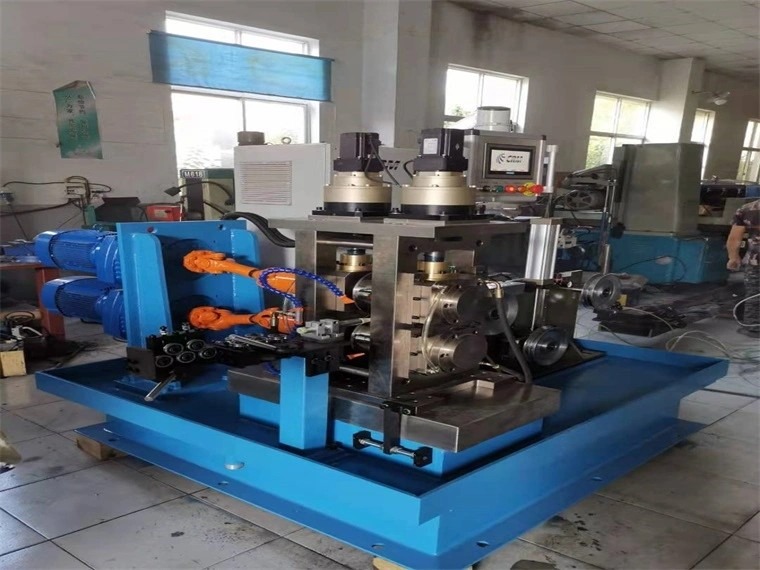
- Flat RollingUse precision rolling mills (2-Hi, 4-Hi, or Multi-Hi) to shape and work the wire into flat profiles. Key controls include roll gap adjustment for consistent thickness, speed control for different copper grades, and cooling/lubrication to prevent scratches. The continuous rotary extrusion machine can produce different types of flat copper wire by exchanging the extrusion die. Learn more about flat copper wire production with advanced rolling mills at Copper Strip Rolling Mill.
- Straightening and CuttingRemove residual curvature and cut the wire to the required lengths. The flat copper wire production line includes components such as a payoff machine, straightening machine, and cutting machine. Proper spooling, including techniques like layer winding, is essential to maintain wire quality and prevent damage. Proper winding preserves surface integrity.
- Quality InspectionEmploy laser gauges, micrometers, and surface inspection systems to verify tolerances, thickness, width, and surface finish.
Key Considerations in Manufacturing
- Material quality for optimal performance
- Rolling precision with tight tolerances
- Production speed balanced with machine robustness
- Automation to increase efficiency and reduce labor costs
- Regular maintenance to prevent defects and downtime
- Cost efficiency by minimizing scrap and optimizing yield
- Maintaining sufficient stock to ensure quick delivery and meet customer demands
- Flat wire can be insulated with custom dimensions and bond coats for specific applications
Flat copper wire is used extensively in manufacturing due to its versatility and adaptability to various requirements.
Benefits of Precision Rolling Mills
- Exceptional accuracy with tight dimensional tolerances
- Superior surface finish reduces defects and secondary processing
- Versatility to roll around flat, square, or custom profiles
- Material efficiency lowers scrap and production costs
- Automation enhances productivity and consistency
- Speed and roll gap control for uniform thickness and shape
- Durable performance ensuring long-term stability
Importance of Choosing the Right Manufacturer or Supplier
- Experienced manufacturers provide consistent, high-quality products
- They help customers find the right flat copper wire product to meet specific requirements
- Customization options for wire dimensions, finish, and packaging
- Technical support for installation, operation, and troubleshooting
- Competitive pricing balancing cost and quality
- Expertise in automation and advanced machinery
Choosing Sky Bluer Industries as your flat copper wire manufacturer or supplier guarantees access to cutting-edge technology, skilled engineering teams, and excellent customer service. Sky Bluer Industries specializes in delivering customized solutions and high-performance flat copper wire products tailored to your specific industrial needs.
Why China Is a Leading Source for Flat Copper Wire

- Advanced technology and skilled engineering teams
- Customizable production lines for diverse requirements
- Cost-effective machines and high-quality materials
- Access to reliable suppliers ,ensuring competitive pricing
- Trusted manufacturers like Sky Bluer Industries offer cutting-edge equipment and professional support
Applications of Flat Copper Wire
- Electronics & Electrical: Circuit boards, connectors, busbars. Flat copper wire is valuable in consumer electronic devices where space constraints limit the cross-sectional area of the wire. It is also used in electrical connectors and fuses due to its low profile and large contact area, ensuring reliable electrical contact in various applications. Due to its fixed conductor geometry, flat copper wire exhibits consistent electrical properties such as impedance and capacitance, which are essential for stable and predictable performance in electronic circuits.
- Transformers & Motors: Windings and coils. Flat wiring configurations eliminate air gaps found in round wiring, increasingthe slot fullness ratio and improving power density in motors.
- Automotive & EV Industry: Wiring harnesses and connectors. The lightweight design of flat copper wire reduces the overall weight of cable assemblies, which is beneficial for automotive and aerospace applications.
- Telecommunications: Signal transmission components. Uniform spacing of conductors in flat cables ensures consistent electrical qualities and minimizes skew in data transmission. Flat copper wire supports high-frequency performance by reducing the skin effect. The skin effect is a phenomenon where alternating current (AC) at high frequencies tends to flow near the surface of a conductor, increasing resistance and causing signal loss. The flat geometry of copper wire increases the surface area and reduces the path length for current, thereby minimizing the skin effect and supporting high-frequency signal transmission.
- Medical Equipment: Precision wires for devices. Flat wire provides structural support and flexibility for precise medical procedures.
- Renewable Energy: Solar panels and energy storage systems.
- Heating Elements: Flat wire is frequently used as a heating element in both domestic and industrial applications.
- Avionics: Flat wire is used in various avionics systems in aircraft, including communication devices and radar systems.
- Assembly: Flat wires can be easily identified for termination, streamlining the assembly process.
- Industrial & Aerospace: Flat wire is used in various industries such as aerospace, industrial, and medical due to its versatility.
- Electrical Properties: Due to its fixed conductor geometry, flat copper wire exhibits consistent electrical properties such as impedance and capacitance.
- Brushes: Flat copper wire is also used in the production of brushes for electrical and mechanical applications.
The Importance of Flat Copper Wire in Modern Manufacturing
Manufacturing flat copper wire demands high-quality raw materials, precision equipment, and skilled processes. Each step—from drawing and annealing to flat rolling and finishing—is crucial for producing consistent, durable, and efficient wire. Selecting the right precision rolling mill and supplier ensures superior performance, reduced waste, and cost-effective production. For reliable, high-performance flat copper wire and advanced rolling equipment, partnering with experienced manufacturers like Sky Bluer Industries China is the key to success in today’s competitive market.