 Skip to content
You use wire rolling machines to change metal wire into exact sizes for many products you use every day. These machines are now very important in many industries around the world, like cars, airplanes, electronics, and building.
- The world market was $1.137 billion in 2024 and is still getting bigger.
Sky Bluer China is the top company that gives new solutions to help you get good, steady results for your business.
Key Takeaways
- Wire rolling machines change metal wire into exact sizes. This helps keep the quality the same for many industries. Using rolling mills can make products better. They also help use less material and save up to 10% on energy costs. Cold rolling makes wire stronger and more accurate. This is good for things like electronics and car parts. Taking care of machines and using the right settings stops problems. This makes sure the wire is smooth and even. Sky Bluer China has advanced rolling mill solutions. They give help and knowledge, so businesses get great results.
Wire Rolling Machines: What They Do
Purpose and Results
Wire rolling machines help shape metal wire into exact sizes. They make sure the wire is the right thickness, width, and has a smooth surface. When you use rolling mills, you get the same results each time. This is important because small mistakes can cause big problems in some industries.
- Rolling mills help you make better products and work faster. For example:
- You can make the weight of your wire almost 70% more even.
- The difference in weight drops by over 66%, so your wire stays close to the target.
- You use about 10% less electricity for every ton of wire you make.
These changes help you get products you can trust, spend less money, and waste less material. Rolling mills help you meet the needs of electronics, cars, and medical tools, where being exact is very important.
Why Rolling Is Needed
You need rolling mills because the wire from the factory is not always the right shape or smooth enough. Rolling mills press and shape the wire until it fits what you need. This stops many problems that could ruin your products.
Here are some problems rolling mills help you avoid:
| Defect Type | Description |
|---|---|
| Wrinkled & Starred Rolls | Loose winding or uneven pulling can bend the wire. |
| Overlapping Rolls | The wire wraps over itself, making thick spots and tight areas. |
| Out-of-Round Rolls | Uneven pulling changes the size or shape of the roll. |
| Telescoping | Quick moves while winding or unwinding need careful control. |
| Crushed Cores | Pulling too hard when winding can crush the middle. |
| Lopsided Rolls | Bad alignment or uneven pulling makes the rolls uneven. |
You also stop cracks, wavy edges, and changes in thickness. These problems often happen when the pressure is wrong, the machines are old, or the settings are not right. Using wire rolling machines keeps your wire smooth, flat, and strong.
Rolling mills are very important for making car parts, medical tools, and electronics. You count on these machines to give you wire that works well every time.
Key Parts of a Rolling Mill

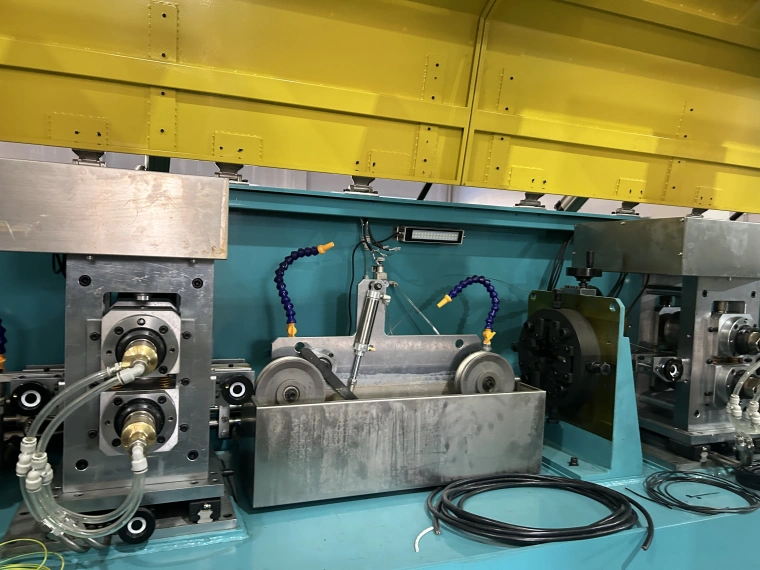
A rolling mill is a strong and accurate machine. All its parts work together to shape the wire very carefully. Let’s look at the main parts you find in today’s rolling mills.
Rollers and Motor
The rollers are the most important part of the rolling mill. You put the wire between the rollers. The rollers press the wire into the right shape and thickness. There are different kinds of rollers for different jobs:
- 2-High rollers are good for making the wire thinner.
- 4-High rollers help make thin or flat wire more exact.
- Cluster mills are used for special shapes and big changes.
The motor and drive system make the rollers turn at the right speed and force. Most rolling mills have a strong gearbox and a good motor. This helps the machine work smoothly. Sky Bluer China uses hard steel rollers with special grooves. This design helps you get wire that is very close to the right size and very smooth.
| Component | What It Does in the Rolling Mill Process |
|---|---|
| Rolls | Squeeze the metal as it goes through, made for certain rolling jobs. |
| Chocks | Hold the roll shafts and keep them lined up and steady. |
| Housing | Holds up the whole machine and keeps it from moving. |
| Adjustment Mechanism | Lets you change the gap and pressure for different wire sizes. |
| Drive Mechanism | Controls how fast and strongly the rolling is. |
Controls and Safety
You use a control system to run the rolling mill safely and easily. Modern rolling mills have PLC controllers and screens. You can change settings with just a few taps. Safety is very important. You get things like holding brakes, safety stops, and self-locking parts to keep you and the machine safe.
| Feature Description | Details |
|---|---|
| Advanced control system | PLC controller, operator screen, safety checks, and AC drives |
| Holding brake | Keeps the machine safe when it stops |
| Full safety limits | Stops damage when lifting or lowering |
| Ergonomic controls | Makes it easy and safe to use |
| Self-locking actuators | Adds more safety when working |
Sky Bluer China puts these safety features in every rolling mill. You can focus on making good wire without worry.
Frame and Support
The frame and support make the rolling mill strong. A solid frame takes in the shaking and force during rolling. This keeps the rollers lined up and the gap correct. When your rolling mill has a strong frame, your wire comes out even and smooth.
- The housing holds up the rolling mill and keeps it steady.
- A good frame helps get rid of heat, so the machine stays correct.
- Strong support means your wire is flat and even every time.
Sky Bluer China makes rolling mills with very straight, even, and round wire. You get up to 0.5 mm/m straightness and thickness control within 0.005 mm. This helps you meet the best industry standards.
How Wire Rolling Machines Work
Step-by-Step Process
You can learn how wire rolling works by looking at each step. First, you put the coil on the decoiler. Next, you unwind the strip and send it to the strip straightener. The strip straightener helps fix any problems in the strip. Then, you guide the strip into the pre-punch press or right into the rolling mill. The rolling mill shapes the strip with forming rolls. After shaping, you straighten the wire again to remove any bends. You cut the wire to the length you want and stack it. Each step helps make sure the wire is the right thickness, width, and smoothness. Using wire rolling machines lets you control every part of the process. This helps stop mistakes and keeps production steady.
Tip: You can change the rolling mill settings for different wire sizes and shapes. This means you can make wire for many things, like electronics, cars, and medical tools.
Cold Rolling Explained
Cold rolling is the main way wire rolling machines shape wire. You shape the wire at room temperature. This makes the wire stronger and more exact. Hot rolling heats the metal, but cold rolling does not. Instead, you use force to change the wire’s structure. Cold rolling makes the wire up to 20% stronger. You also get a smoother finish and better size control. The process helps the wire resist rust and lets you make very exact products.
| Characteristics | Hot Rolled Steel | Cold Rolled Steel |
|---|---|---|
| Production Process | Heated above the re-crystallization temperature, then rolled | Room temperature, followed by annealing and cold drawing |
| Surface Finish | Rougher finish with scale present | Smoother, cleaner finish |
| Dimensional Tolerance | Less precise | More precise |
Cold rolling helps you get very close to size control. You can make a wire that is straight within 0.5mm per meter. You can also control the thickness and width to less than 0.005mm. This accuracy is important for high-tech products.

Production speed depends on the material you use. For example, copper can go up to 400 meters per minute with cold rolling. Steel and other metals have different speeds. Cold rolling always gives you better control and a smoother surface.
Copper Wire Rolling Machine Features
Copper wire rolling machines have special benefits. These machines do not need dies, so you save money. You get wire with a very smooth surface and fewer problems. You also spend less on running the machine.
| Unique Features | Copper Wire Rolling Machines | Other Metal Machines |
|---|---|---|
| Rolling Process | Die-free rolling process | Typically uses dies |
| Surface Quality | Exceptional surface quality, free from defects | Varies, may have imperfections |
| Operating Costs | Lower operating costs due to no die maintenance | Higher due to the death costs |
| Production Efficiency | Improved production efficiency | Standard efficiency |
| Precision and Shape Variety | High precision for various shapes and sizes | Limited to specific shapes |
Sky Bluer China makes copper wire rolling machines for very exact work. You can make wire as thin as 0.15mm and as thick as 0.30mm. The width can be from 2.50mm to 4.00mm. You can control thickness to within +/- 0.001mm and width to +/- 0.05mm. These machines use servo-controlled gaps and strong rolls. They also have good cooling and oil systems. You can change rolls fast and keep the wire tight.
| Feature | Specification |
|---|---|
| Minimum Thickness | 0.15mm (0.0059″) |
| Maximum Thickness | 0.30mm (0.0118″) |
| Minimum Width | 2.50mm (0.1″) |
| Maximum Width | 4.00mm (0.157″) |
| Thickness Tolerance | +/- 0.001mm (0.00004″) |
| Width Tolerance | +/- 0.05mm (0.002″) |
| Servo-Controlled Gap | Yes |
| Roll Material | Tungsten carbide or tool steel |
| Cooling & Lubrication | Efficient system |
| Quick Roll Change | Yes |
| Tension Control | Precise |
These features help you make wires for electronics, energy, and medical uses. The copper wire rolling machine from Sky Bluer China helps you meet tough rules for accuracy and speed. You get a wire that is straight, smooth, and ready for advanced work.
Uses and Benefits
Industry Applications
Rolling mills are used in many big industries. They help make wires for electronics, cars, and buildings. The table below shows where these machines are used and what they do:
| Industry | Market Share | Main Applications |
|---|---|---|
| Electrical and Electronics | >50% | Precision wire components for electronics and EVs |
| Construction | ~25% | Infrastructure development and urbanization |
| Automotive | ~15% | Wiring configurations for electric vehicles |
Rolling mills help make things like Hydra-Roll Wire Mesh Roller. They also make many other wire parts. These parts power devices, connect systems, and support buildings you use every day.
Practical Advantages
Using a rolling mill gives you many good results. You save money and make your work better. Here are some main benefits:
- Better precision means you waste less material and spend less on supplies.
- Automation lowers labor costs by needing less hand labor, so there are fewer mistakes and less waste.
- Better production means higher quality, so you have fewer returns and less rework.
Tension control in rolling mills helps you cut scrap by about 30%. Adjustable rollers keep wire thickness even, saving time and making products more alike. Automated gauge control and custom settings help you work with different materials, so you make fewer mistakes and get better results. You finish jobs faster and use less material, making your business run smoothly.
Sky Bluer China Solutions
Sky Bluer China is a company that makes rolling mill machines. You can pick from many products, like full production lines, universal profile rolling mills, and undriven Turks Head systems. The table below shows some choices:
| Product | Description |
|---|---|
| Complete Production Lines | High-performance machines for producing shaped, flat, and round profile wires suitable for various industries. |
| Universal Profile Rolling Machine | Features dual-axis adjustability for precise shaping of profiles, minimizing roller changing time. |
| Undriven Turks Head | Versatile design for rolling rectangular and square profiles without changing rollers, enhancing efficiency. |
| Auxiliary Equipment | Includes butt welding machines, coiling systems, rod breakdown machines, and continuous annealing furnaces for a complete production line. |
You also get fast customer service and help after you buy. Sky Bluer China works hard to bring new ideas and full solutions. This helps you get steady production, high accuracy, and better results in electronics, cars, medical, and energy fields.
Simple Analogy
Rolling Dough Comparison
Imagine you roll out dough to make cookies. You press the dough with a rolling pin to get it flat and even. You check the thickness and shape as you go. If you press too hard, the dough cracks. If you do not press enough, the dough stays thick and uneven. You want every cookie to look the same and bake evenly.
Wire rolling machines work in a similar way. You feed metal wire between strong rollers. The rollers press and shape the wire, just like your rolling pin shapes dough. You control the pressure and gap to get the exact thickness and width you need. If you set the rollers right, you get a smooth, even wire every time. This process helps you avoid cracks, bumps, or uneven spots in the wire.
Just like baking, precision matters. When you use the right settings, you get perfect results every time.
Everyday Products Made with Rolled Wire
You see rolled wire in many products around you. These items rely on the strength, smoothness, and accuracy that rolling machines provide. Here are some common examples:
- Wire baskets
- Wire displays
- Wire handles
- Wire racks
- Extension springs
- Torsion springs
- Welded metal mesh
- Wire cloth
Rolled wire makes these products strong and long-lasting. High-grade stainless steel wire mesh resists sagging and wear. Its corrosion resistance means you can use it in kitchens, outdoors, or factories without worry. The strength-to-weight ratio keeps products sturdy but light. Cold heading wire, shaped by rolling, creates tough automotive parts and fasteners. This process reduces waste and keeps quality high.
When you choose products made with rolled wire, you get items that last longer, need less care, and perform better in daily use.
Wire rolling machines shape metal wire very accurately. Many industries use them. You must follow safety steps when you use these machines:
- Only trained people should use the machine.
- Always look at the machine before you start.
- Use the correct way to cut.
- Hold materials tight and steady.
- Make sure coolant flows, especially in cold weather.
- Never clean blades while the machine is working.
- Do not go past the machine’s limits.
- Follow all safety rules.
- Do not fix the machine when it is running.
- Turn off the power and lock up after you finish.
If you want to know about costs or how to care for the machine, Sky Bluer China can help you. You can ask them for expert help:
| Method | Details |
|---|---|
| Phone | +86 136 4191 9128 |
| WhatsApp +86 136 4191 9128 | |
| drawingmachine66@gmail.com /wire@precision-rolls.com | |
| Address | Suzhou City and Zhangjiagang City, Jiangsu Province, China |
Sky Bluer China will help you with every step. You can do well with the right machine and good advice.
FAQ
How many rolling passes are needed on a wire rolling machine to achieve the final wire dimensions?
The number of rolling passes on a wire rolling machine depends on the material type, reduction ratio, and target profile. High-precision flat or shaped wire typically requires multiple passes to gradually reduce diameter while maintaining surface quality and mechanical properties. Rolling too much in a single pass can cause internal stress, cracks, or uneven thickness.
What is the maximum reduction ratio per pass on a wire rolling machine?
The maximum reduction ratio a wire rolling machine can handle varies depending on the wire material, roll hardness, and mill configuration. For most metals, a reduction of 10–20% per pass is typical. Harder alloys may require smaller reductions to prevent roll wear and wire defects. Gradual reduction ensures both dimensional accuracy and surface integrity.
How can a wire rolling machine maintain thickness tolerance and flatness?
Modern wire rolling machines use precision rolls, servo-driven roll positioning, and real-time thickness measurement systems (laser or CCD gauges). Combined with closed-loop feedback and proper tension control, these machines can maintain tight tolerances, often within ±0.005 mm for high-precision applications.
Which materials are suitable for cold rolling on a wire rolling machine?
Wire rolling machines can process a wide range of metals, including:
- Stainless steel
- Copper and copper alloys
- Aluminum
- Nickel alloys
- Titanium and titanium alloys
Material selection and rolling parameters must be optimized based on hardness, ductility, and final application.
How often do rolls on a wire rolling machine need to be replaced or re-polished?
Roll life on a wire rolling machine depends on material hardness, production volume, and maintenance practices. Carbide or tool-steel rolls last longer but gradually wear, affecting thickness accuracy and surface finish. Regular inspection, cleaning, and occasional re-polishing are recommended to maintain optimal performance.
What type of tension control is required for a wire rolling machine?
Tension control is crucial in a wire rolling machine to prevent wire breakage, edge cracks, and surface defects. Most modern lines use closed-loop tension control systems with load cells, servo drives, and automatic roll speed adjustment. Consistent tension ensures uniform flatness and prevents deformation during high-speed production.
Read more: https://drawing-machines.com/how-many-types-of-wire-drawing-machines-are-there/